Across Oceans and Interstates: How to Ship Your Motorcycle Without Breaking Your Heart
08/06/2026
⛽
Track Your Fuel Costs
Log every fill-up, monitor consumption trends and keep all your motorcycle expenses in one place — powered by AI.
Start Your Fuel Journal →You’ve finally secured it—that pristine, low-mileage Ducati 916, or maybe a bespoke custom build that took three years of sweat, tears, and a severely depleted savings account to finish. Now comes the genuinely terrifying part: moving it.
Table of Contents
Throwing a tarp over your bike and strapping it to a rusty flatbed might work for a beat-up paddock scooter, but for high-value machines, the logistics game changes entirely. Whether you're moving a track bike to a winter testing facility or importing a vintage cafe racer from overseas, how your bike travels is just as important as how it rides.
Let's talk about the silent assassins of vehicle shipping and why standard freight sometimes just doesn't cut it.
The Invisible Assassins: Why Weather is Your Enemy
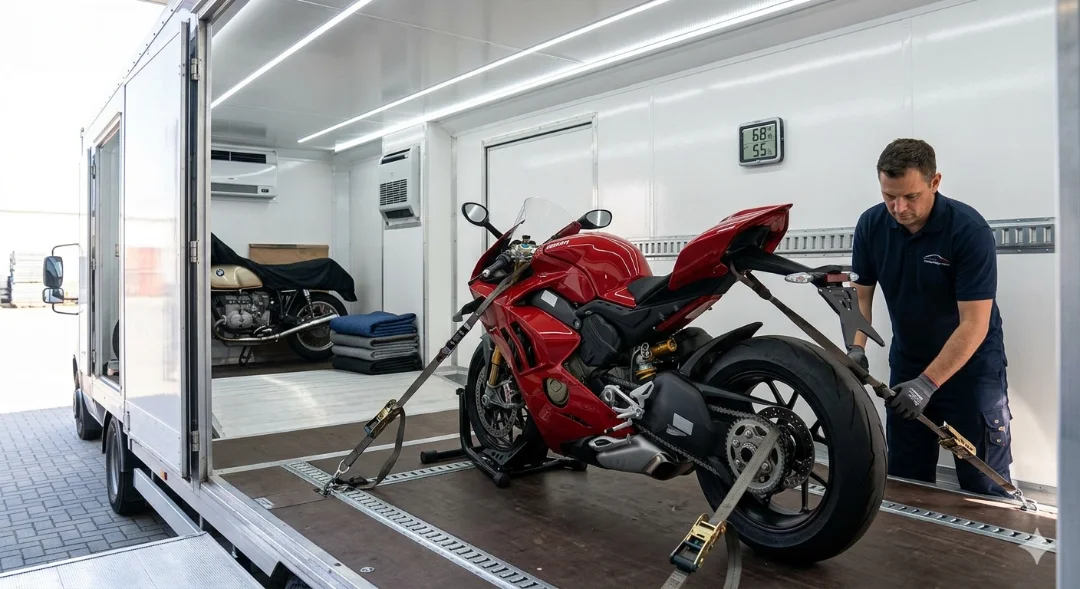
When a motorcycle sits in a standard, unventilated metal shipping container, it becomes a victim of basic physics. Mother Nature hates your chrome, and she has a few tricks up her sleeve:
- "Container Rain": Yes, this is a real logistics term. When temperatures drop rapidly overnight, moisture in the trapped air condenses on the steel ceiling and drips directly onto your magnesium engine covers, unprotected steel, and leather seats. Hello, instant rust.
- Extreme Heat Baking: A dark metal container baking in the summer sun can reach internal temperatures high enough to degrade synthetic rubber tire compounds, melt cheap adhesives, and cause fuel expansion issues.
- Deep Freezes: On the flip side, extreme cold can wreak havoc on modern TFT dashboard displays, crack sensitive plastics, and completely kill lithium-ion batteries.
The Solution: Creating a Microclimate
This is where standard freight operators tap out and specialized logistics step in. If you are moving a museum-quality classic, sensitive racing equipment, or a bike packed with modern electronics across vast regions, you cannot rely on ambient weather. You need to take the weather out of the equation entirely.
Utilizing temp control transportation ensures the cargo environment remains at a steady, optimal climate regardless of what is happening outside. By managing the internal temperature and humidity, you prevent the rapid expansion and contraction of metals and fluids, keeping your engine seals intact and your electronics perfectly safe. For high-end motorcycles, it’s not just a fancy upgrade; it’s cheap insurance against catastrophic, silent damage.
Going Global Without Losing Your Mind
Shipping across state lines is one thing; sending a motorcycle overseas is an entirely different beast. International shipping involves complex customs brokerage, specific crating standards (like ISPM-15 treated wood), and multi-modal logistics where your bike might touch a truck, a train, and a cargo ship all in one week.
You need a partner who sees the whole chessboard. Tapping into comprehensive global shipping networks—you can see how the pros handle heavy-duty international scopes at divinetrans.com/page/global—guarantees that your two-wheeled investment is tracked, pampered, and compliant with every border regulation from Los Angeles to Leipzig.
The Pre-Shipment Checklist
Before you hand over the keys to the transport driver, make sure you've properly prepped your machine. (This will save you massive headaches later):
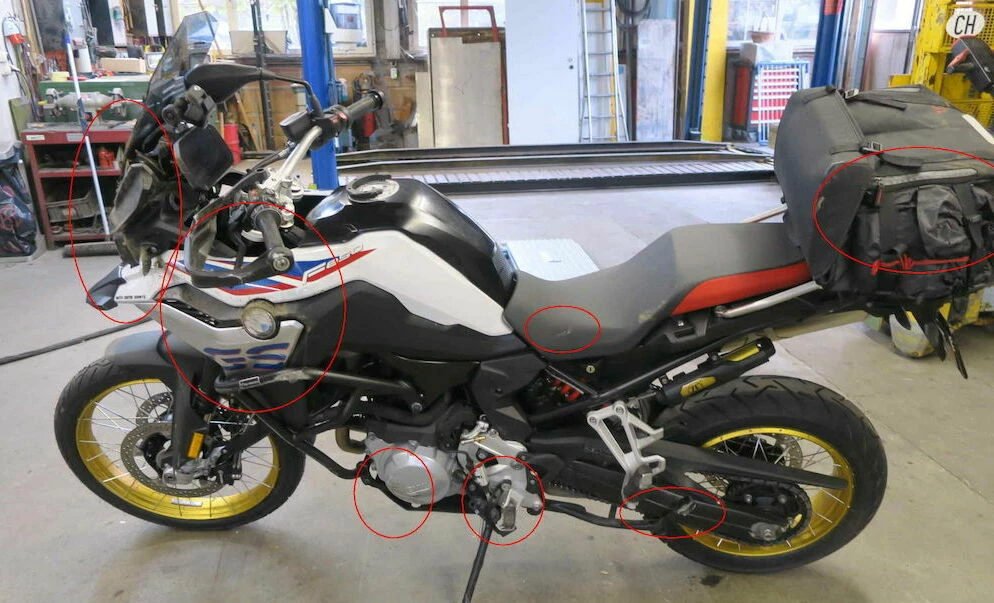
- Document Everything: Take high-resolution photos and videos of the bike from every conceivable angle before it gets loaded.
- Prep the Fluids: Depending on the carrier's regulations and whether the bike is flying or sailing, you may need to drain the fuel tank to a quarter full (or completely) and ensure there are no oil leaks.
- Mind the Battery: Disconnect the battery terminals and tape them off to prevent any parasitic drain or accidental sparks during transit.
- Strip the Extras: Remove loose accessories like GPS units, aftermarket luggage, helmet locks, and toll passes. If it can vibrate loose, it belongs in a box, not on the bike.
Riding is all about freedom, but shipping is all about control. Don't let a budget freight decision turn your dream ride into a restoration project before you've even turned the key. Do your homework, control the climate, and keep the rubber side down.
Sponsored Article
#sponsored
Check other guides
Vehicle History Report Ranking - top 5 sites where you can verify VIN

What modern Garage Management Software should provide (and why it matters)

Planning a Cross-Country Motorcycle Adventure: Riding vs. Shipping Your Bike
Opinion about CarVertical we check the vehicle history by VIN or registration plate.
Best Motorcycle Oil: Synthetic or Mineral? | How to Choose the right one