Kawasaki CORLEO Heads to EICMA 2026: Four Legs, Hydrogen Power
29/10/2026
⛽
Track Your Fuel Costs
Log every fill-up, monitor consumption trends and keep all your motorcycle expenses in one place — powered by AI.
Start Your Fuel Journal →Kawasaki is bringing a full-scale CORLEO mock-up to EICMA 2026, trading wheels for four robotic legs and conventional steering for rider weight shifts. Here is what the hydrogen-powered adventure concept promises—and why its development roadmap matters.
Table of Contents
- 1. Key takeaways
- 2. Where to see Kawasaki CORLEO at EICMA 2026
- 3. What is Kawasaki CORLEO?
- 4. How the 150cc hydrogen powertrain works
- 5. How would you control a four-legged adventure vehicle?
- 6. SAFE ADVENTURE: navigation beyond a line on a map
- 7. When could Kawasaki CORLEO reach commercial use?
- 8. Why CORLEO deserves a look—but not your next-bike budget
Key takeaways
- Kawasaki CORLEO will appear at EICMA on November 5–8, 2026, at booth N46 in Hall 11, as a full-scale mock-up.
- The proposed powertrain uses a 150cc hydrogen engine to generate electricity, with hydrogen canisters mounted at the rear.
- You control the concept through body-weight shifts, while four robotic legs replace wheels.
- Kawasaki is developing terrain-aware navigation alongside the vehicle and targets full commercialization around 2035.
Where to see Kawasaki CORLEO at EICMA 2026
If you are visiting Milan this November, put Hall 11, booth N46 on your list. Kawasaki will display CORLEO alongside its current motorcycles and new 2027 models. The attraction is a full-scale mock-up: an opportunity to understand its proportions rather than another screen-sized glimpse of a futuristic machine.
The public exhibition runs from Thursday, November 5, through Sunday, November 8, 2026, at Fiera Milano Rho. Public opening hours are 9:30 a.m. to 6:30 p.m.; November 3–4 are reserved for press and industry visitors. Those dates matter if you are booking a flight specifically to see the show.
Our recommendation: make CORLEO a stop during a wider EICMA visit, rather than the sole reason for the trip. Its appeal is the engineering question it poses: what happens when a motorcycle manufacturer stops assuming that an adventure vehicle needs wheels?
What is Kawasaki CORLEO?
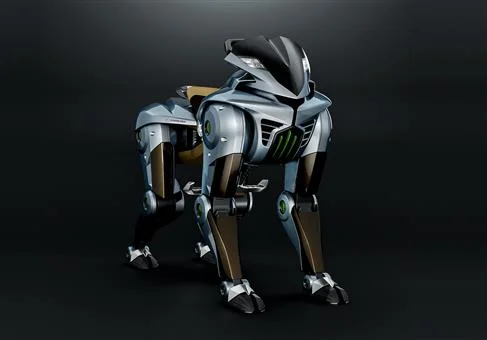
Kawasaki describes CORLEO as a Robotic Multi-legged Vehicle, or RMV. It combines four-legged robotics with the company's motorcycle experience, aiming to preserve the pleasure of controlling a machine while opening a different approach to rough terrain. The concept previously appeared at Expo 2025 Osaka, Kansai, Japan.
Calling it a robotic horse is an understandable shortcut, especially because the rider steers through weight shifts. But the important distinction is functional: CORLEO is intended to place its feet on the ground rather than roll across it. Kawasaki's design incorporates split rubber hooves intended to accommodate uneven surfaces, including rocky ground and grassland.
Motorcycle thinking, applied to legs
The motorcycle connection goes beyond the badge. Kawasaki applies a swingarm-inspired mechanism that allows the rear-leg assembly to move vertically relative to the front. The intended benefits include absorbing movement-related impacts and helping the rider maintain a useful view of the terrain ahead when climbing.
For an adventure rider, that is the interesting part. Getting over an obstacle is only half the problem; staying composed enough to identify the next one matters just as much. Our view is that predictable body movement would be a more meaningful achievement than a spectacular-looking leap.
“I would judge CORLEO less by how dramatic it looks and more by how confidently a rider could understand its next movement. For me, the strongest idea is combining terrain adaptation with a riding position that lets you keep looking ahead. That is a genuinely useful ambition, not just a reason to add more moving parts.”Przemek Gąsiorowski, Editor-in-Chief of Moto Trips
How the 150cc hydrogen powertrain works
CORLEO's proposed drivetrain starts with a 150cc hydrogen-fueled engine. That engine generates electricity, which supplies drive units in the four legs. Hydrogen is carried in rear-mounted canisters. In other words, the combustion engine provides electrical power rather than mechanically driving a wheel or directly moving the legs through a conventional transmission.
This also explains why the displacement needs careful interpretation. You should not compare CORLEO with a 150cc trail bike simply because the engines have the same nominal capacity. Here, the engine is part of an electricity-generating system serving a fundamentally different task.
For future adventure use, our practical questions would concern fuel supply, operating time, servicing and recovery. An unusual powertrain earns its place on a trip when you can support it away from the exhibition hall—not merely when its specification sounds interesting.
How would you control a four-legged adventure vehicle?
Kawasaki's concept uses rider weight shifts detected through the foot supports and handlebars. Adjustable stirrup length is intended to help you maintain a suitable posture. Instead of treating the rider as a passenger on a walking platform, the design makes body movement part of the control system.
That creates an intriguing challenge. You would want deliberate inputs to produce clear responses without every bump-induced movement becoming an instruction. From our perspective, the quality of that relationship will determine whether CORLEO feels approachable or demands too much concentration.
Kawasaki plans to develop a riding simulator by 2027. Its roadmap describes using a virtual test course to refine the riding experience, while the wider development program also envisages applications for gaming and esports.
SAFE ADVENTURE: navigation beyond a line on a map
CORLEO sits within Kawasaki's SAFE ADVENTURE concept. The planned navigation system would take account of weather, temperature, surface conditions and wildlife presence, then guide users toward safer routes. Kawasaki intends to make the service accessible through the vehicle's instrument panel and smart devices.
For anyone who plans mountain days, the appeal is easy to understand. Our assessment is that information about changing conditions could be more useful than simply adding another destination to a navigation screen. The worthwhile outcome would be helping you choose a more suitable route before a difficult section becomes a problem.
We would also treat the navigation element as interesting in its own right. Because Kawasaki includes smart-device access in the plan, the wider idea is not confined to the experience of sitting on CORLEO. That is a potentially valuable direction even for readers more interested in route planning than robotic transport.
When could Kawasaki CORLEO reach commercial use?
Kawasaki targets full commercialization around 2035. Its roadmap identifies intermediate steps, including simulator development and a planned new model for Expo 2030 Riyadh. The eventual commercial focus is principally tourism and leisure, which gives the project a more specific direction than simply becoming another vehicle in a motorcycle showroom.
| Year | Milestone | Purpose or intended application |
|---|---|---|
| 2025 | CORLEO concept exhibited at Expo Osaka, Kansai | Public introduction of the mobility concept |
| 2027 | Planned riding simulator | Development platform for refining the riding experience |
| 2030 | Planned new model at Expo Riyadh | Actual-vehicle riding phase and envisaged security-staff mobility |
| 2035 | Targeted commercial release | Primarily tourism and leisure applications |
These are Kawasaki's development milestones, with the future stages expressed as plans rather than completed achievements.
The project is led by the SAFE ADVENTURE Business Development Team, which reports directly to the president of Kawasaki Heavy Industries. Kawasaki announced the commercialization-development effort in December 2025, establishing an organizational structure behind the concept.
Why CORLEO deserves a look—but not your next-bike budget
Our take is straightforward: CORLEO is worth your attention as a different interpretation of adventure mobility, not as a reason to postpone buying a motorcycle. Its tourism-oriented roadmap suggests a future experience you might encounter at a destination rather than necessarily own at home. That is an inference from Kawasaki's stated commercial focus, not a confirmed sales model.
If you visit EICMA, look beyond the novelty of four legs. Consider the riding position, the relationship between rider and machine, and what would make the concept useful on an actual mountain outing. The memorable question is not whether Kawasaki can make something that resembles a robotic horse. It is whether that machine could deliver an adventure you would genuinely want to repeat.
#Kawasaki#CORLEO#EICMA 2026#Hydrogen power#Adventure mobility#Robotics
Frequently Asked Questions
- What is Kawasaki CORLEO?
- CORLEO is Kawasaki's four-legged personal mobility concept, officially described as a Robotic Multi-legged Vehicle. It combines robotics with motorcycle-derived engineering and is designed to respond to rider weight shifts.
- Where can you see CORLEO at EICMA 2026?
- Kawasaki will exhibit a full-scale CORLEO mock-up at booth N46 in Hall 11 on November 5–8, 2026. EICMA takes place at Fiera Milano Rho, with public opening hours of 9:30 a.m. to 6:30 p.m.
- How is Kawasaki CORLEO powered?
- The concept uses a 150cc hydrogen engine to generate electricity for drive units in its four legs. Hydrogen is supplied from rear-mounted canisters.
- When is Kawasaki CORLEO expected to become commercially available?
- Kawasaki targets commercialization around 2035, principally for tourism and leisure applications. Earlier planned milestones include a riding simulator in 2027 and a new model at Expo 2030 Riyadh.
- What is CORLEO's SAFE ADVENTURE navigation system?
- It is a planned navigation service designed to consider weather, temperature, surface conditions and wildlife presence when guiding users toward safer routes. Kawasaki intends to offer access through CORLEO's instrument panel and smart devices.
Check other news
Honda at EICMA 2026: Africa Twin 1150, New Fireblade and V3
OMODA X: 1,800kg towing capacity, thermal imaging and a weekend-ready idea
JETOUR Global Technology Experience Day 2026: Four Days From Wuhu to the Mountains of Moganshan
Chery WCWL 2026 and International User Summit, Wuhu, October 20–23
BMW F 450 R and F 450 RR: A Naked Bike and a Supersport on the F 450 GS Platform