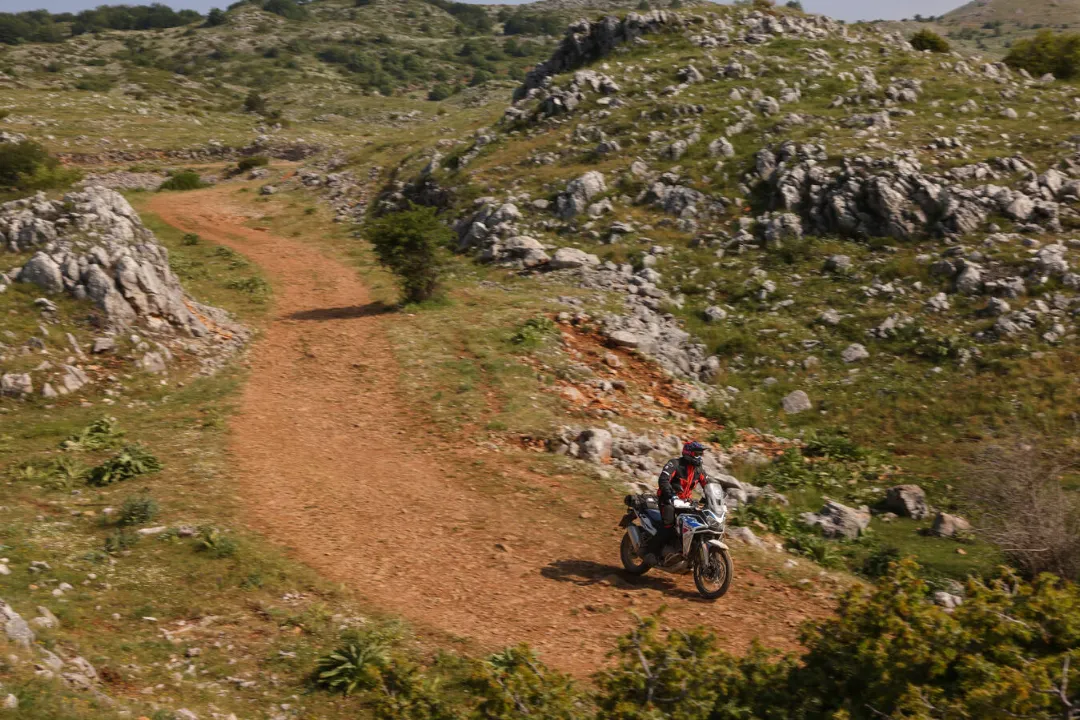
Iceland and the Faroe Islands by Motorbike: How to Plan and Ride the North Atlantic's Best Loop
06/08/2026
⛽
Track Your Fuel Costs
Log every fill-up, monitor consumption trends and keep all your motorcycle expenses in one place — powered by AI.
Start Your Fuel Journal →Most riders treat Iceland and the Faroe Islands as two separate dreams. One ferry changes that. The same boat that carries you and your bike to Iceland stops at the Faroes on the way, which means you can string both into a single trip without shipping your motorcycle across an ocean or handing your holiday to a tour company.
Table of Contents
- 1. Why pair Iceland with the Faroe Islands?
- 2. Getting there: the Smyril Line ferry
- 3. When to go
- 4. What bike, and should you ship, rent or ride your own?
- 5. Riding the Faroe Islands
- 6. Riding Iceland
- 7. A realistic two-week itinerary
- 8. What it costs
- 9. Practical know-how
- 10. Guided tour or do it yourself?
- 11. Ready to ride
This is not a gentle ride. It is wind, weather that turns in twenty minutes, fuel stations spaced further apart than you would like, and roads that go from perfect tarmac to gravel without much warning. It is also, hands down, one of the best things you can do on two wheels in Europe. We have put together what you actually need to know to plan it and ride it yourself, with the brochure gloss left out.
Why pair Iceland with the Faroe Islands?
The honest answer is logistics. The Smyril Line ferry from Denmark calls at the Faroe Islands before it reaches Iceland, so the Faroes are not a detour. They are on the way. Skipping them would be like driving past the best corner on the road because you were in a hurry to get to the next one.
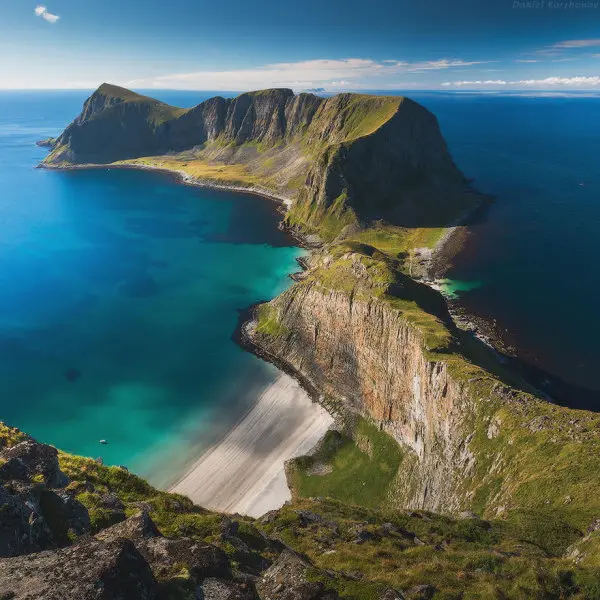
The two are nothing alike to ride, and that contrast is the whole point. The Faroe Islands are compact, green and vertical: eighteen islands stitched together by tunnels and bridges, where you are never more than a short ride from the next fjord. Iceland is vast and raw, a place where you can ride for an hour and see no buildings, just lava fields, glaciers and steam rising off the ground. Do them back to back and you get two completely different rides in one trip.
Getting there: the Smyril Line ferry
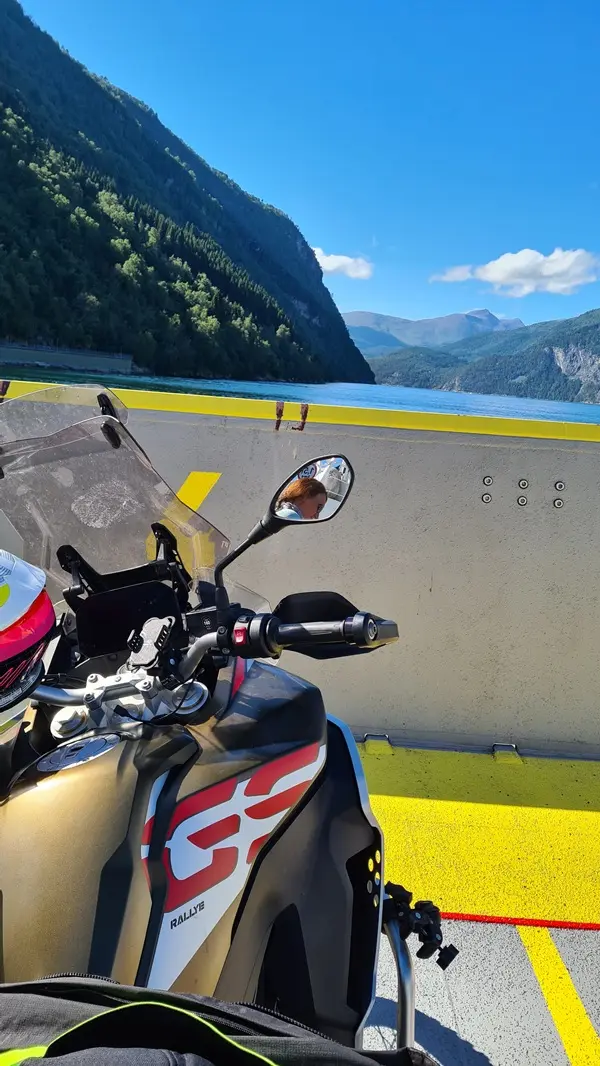
There is exactly one passenger and vehicle ferry that connects mainland Europe with Iceland, and it is run by Smyril Line. The ship is the MS Norröna, and it sails from Hirtshals in northern Denmark to Tórshavn in the Faroe Islands, then on to Seyðisfjörður on Iceland's east coast.
A few things worth knowing before you book:
- Season. The Norröna runs weekly from April to late November. In the summer months there are two departures a week from Denmark to the Faroes, with one of them continuing to Iceland. From late November to around mid-March there is no sailing to Iceland at all, so this is firmly a warm-season trip.
- Crossing time. The leg from Denmark to the Faroes takes just under a day. The full crossing to Iceland is around two nights in summer, longer off-season. You sleep on board, so book a cabin unless you fancy a couchette and a stiff neck.
- Your bike travels with you. You ride on, strap it down on the vehicle deck, and ride off at the other end. No crating, no freight agent, no waiting a week for it to clear customs. Bring your own tie-down straps and a few rags; the crew provide lashing points but the deck can be greasy.
The clever move is to break the journey. Get off at Tórshavn, ride the Faroes for a few days, then catch a later sailing onward to Iceland. Smyril Line lets you do this, and it turns a long sea crossing into two manageable hops with the best stopover in the North Atlantic in between.
If shipping your own bike sounds like too much commitment, there is a second route: fly into Reykjavík or Tórshavn and rent a motorcycle locally. Iceland in particular has a small but real adventure-bike rental scene built around the big BMW and Honda machines. It costs more per day and you lose the ferry experience, but you skip the long ride up through Europe to Denmark.
When to go
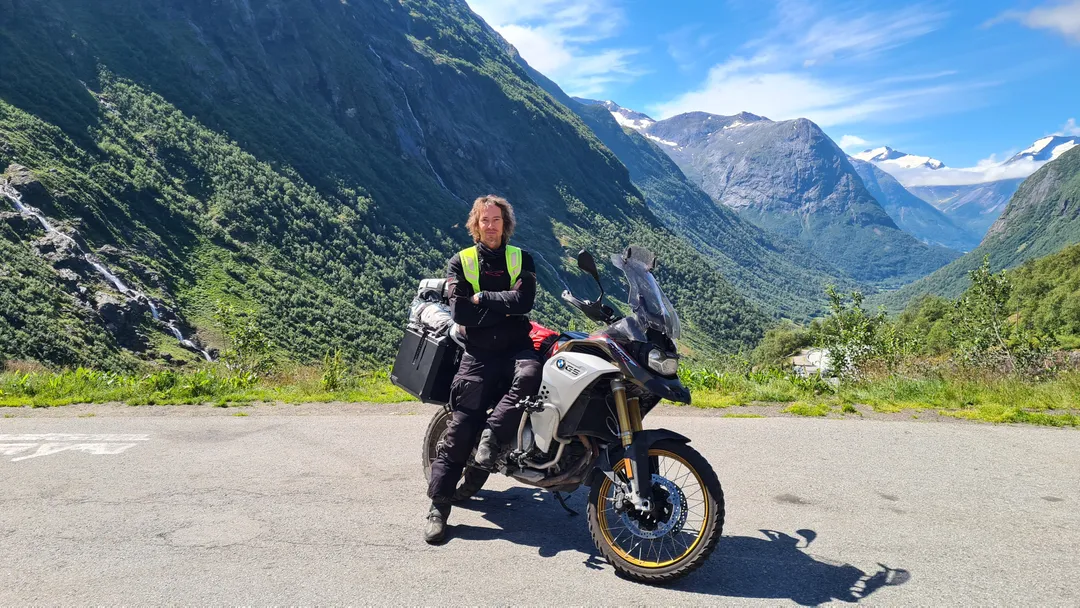
The riding window is short and it is dictated by weather, not by the calendar you would like to use.
June to early September is the sweet spot. The Norröna is running its full schedule, the days are absurdly long, and Iceland's highland roads are open. Late June through July gives you the midnight sun, when it never really gets dark and you can ride until midnight with the sun still hanging above the horizon. It is a strange, brilliant thing the first time you experience it.
A rough month-by-month read:
- April to May: the ferry is running but the weather is still cold and unsettled, and Iceland's interior is closed. Faroe-focused trips only.
- June: things open up. Highland F-roads typically start opening from late June as the snow clears.
- July to August: peak. Warmest, longest days, everything open. Also the busiest and priciest, though "busy" in this part of the world is relative.
- September: quieter, cheaper, beautiful light, and the first hint that the season is closing. The interior roads start shutting again from early September.
Whatever month you pick, do not expect a forecast to hold. Both countries sit in the path of North Atlantic weather, and "four seasons in one day" is not a cliché here, it is a Tuesday. Pack for rain and wind every single day and treat the sunshine as a bonus.
What bike, and should you ship, rent or ride your own?
You do not need a fully kitted rally bike for this. Plenty of people do the whole loop on a middleweight adventure machine, a sport-tourer, or even a sensible naked with luggage. What matters more than the badge is that the bike is comfortable for long days, handles crosswind without scaring you, and has enough range to cover the gaps between fuel stops in Iceland.
Three honest options:
- Ride your own bike to Denmark and ferry over. The most rewarding, the most committing. You get your own machine, fully loaded, and the trip starts the moment you leave home. The downside is the days of riding up through Europe at each end and the ferry cost.
- Rent locally. Fly in, collect a bike, ride. Less hassle, no ferry, but rental rates in Iceland are steep and the choice is limited. Best if you are short on time or live a long way from northern Europe.
- Ship the bike and fly. Some riders crate their motorcycle to Iceland and fly in to meet it. It is the most expensive and the most faff, and unless you are starting a much longer expedition it rarely makes sense over the ferry.
For most people coming from Europe, the ferry wins. For most people coming from further afield, renting is the pragmatic call.
Riding the Faroe Islands
The Faroes punch far above their size. The whole archipelago is small enough to ride in a few days, but the roads are so good and the scenery so relentless that you will want to slow down and stay longer.
The tunnels are part of the adventure. Many of the islands are linked by tunnels, and four of them run under the sea. These are the only toll roads in the country. The longest, Eysturoyartunnilin, is 11.4 km and contains the world's first undersea roundabout, lit up like something from a film. You do not stop to pay. A camera reads your plate at the entrance, and the toll is settled afterwards, normally through your rental agency or online, so check how that works for a foreign-plated bike before you ride through.
Watch the sheep. There are roughly 80,000 of them and they roam free. They stand on the road, on the verges, and occasionally launch themselves across your line for no reason at all. On a bike this is not a quaint detail, it is a genuine hazard. Ease off whenever you see them, including the ones that look settled on the grass.
The weather is the boss. Fog can drop onto a mountain pass in minutes and lift just as fast. Wind funnels between the islands and can shove a bike around on exposed sections. None of it is dangerous if you respect it; all of it is dangerous if you do not.
How many days? Three to four full days lets you ride the main islands without rushing: Streymoy and the capital Tórshavn, Eysturoy, the northern islands, and a run out west toward Vágar. Add a day if the weather turns and you want to wait it out, which you will.
Riding Iceland
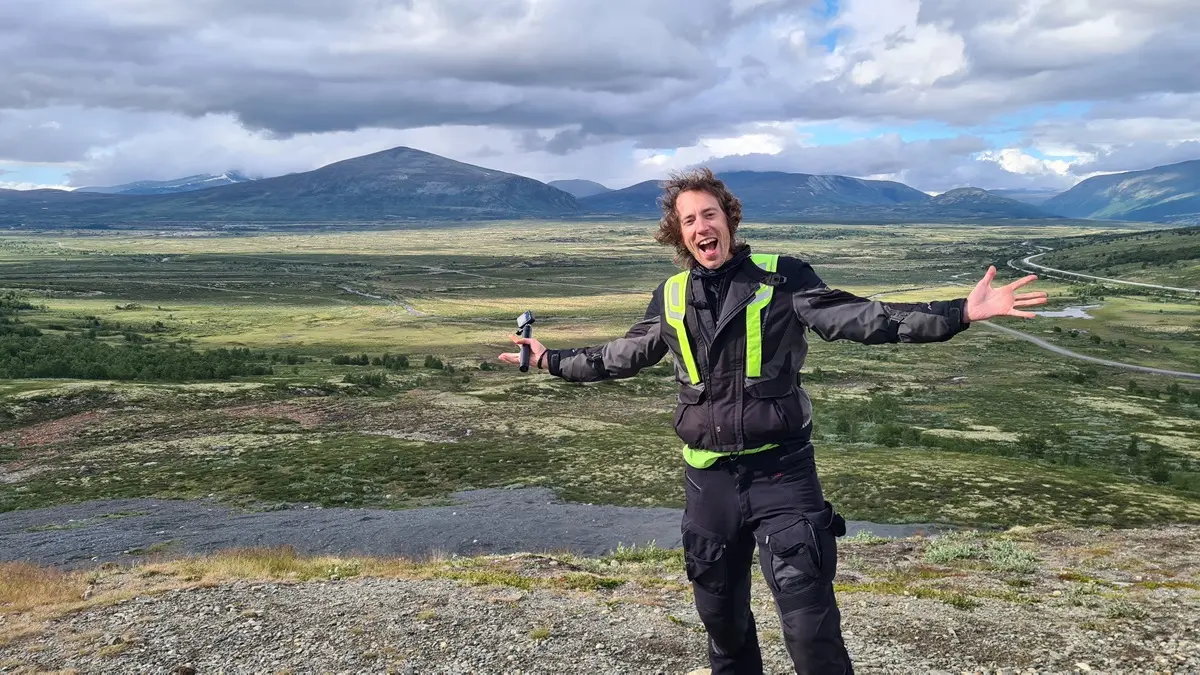
Iceland is where the trip goes from beautiful to overwhelming, in the best way.
The Ring Road is your spine. Route 1 loops the entire country on tarmac, around 1,300 km, linking almost everything you have seen in photographs: waterfalls, black-sand beaches, glacial lagoons, geothermal valleys. It is paved, well maintained and rideable on any bike. If you only had Route 1 and nothing else, the trip would still be worth it.
The F-roads are a different conversation. These are the highland mountain tracks, marked with an F before the number, like F35 or F208. They are gravel, often rough, and they cross rivers with no bridge. By law they are 4×4 only, and motorcycles sit in a grey area: riders do tackle them, but it is demanding, the surface is unforgiving, and no insurance in Iceland covers water damage if you drop the bike in a river. They open late, roughly from late June to early September, depending on the snowmelt. If you are an experienced off-road rider on the right bike, a few of them are the highlight of the country. If you are not, there is zero shame in keeping to the Ring Road and the easier graded gravel roads off it. The scenery does not check your tyres.
The real challenges are wind and distance. Crosswind in Iceland is no joke; it can move you across a lane and it gets worse near the coast and the glaciers. Fuel stations can be a long way apart in the east and the interior, so fill up when you can rather than when you are empty. And you must have valid insurance for the bike, otherwise it will not be allowed off the ferry.
A realistic two-week itinerary
This is a skeleton, not a schedule to obey. It assumes you ride your own bike and break the ferry journey at the Faroes. Stretch or trim to taste.
- Days 1–2: Ride to Hirtshals, board the Norröna, overnight crossing to Tórshavn.
- Days 3–5: Faroe Islands. Tórshavn and Streymoy, the subsea tunnels, Eysturoy, the dramatic northern islands, a run out to Vágar and the cliffs.
- Day 6: Board the onward sailing to Seyðisfjörður, Iceland.
- Days 7–8: East and southeast Iceland. Glacier lagoons, the long coastal sweeps, your first proper taste of the scale.
- Days 9–11: South and southwest. Waterfalls, black beaches, the geothermal areas, optional highland detours if you and the bike are up for it.
- Day 12: North toward Akureyri and the volcanic Mývatn area.
- Days 13–14: Complete the Ring Road back to the east, ride to Seyðisfjörður, and catch the ferry home.
Two weeks is comfortable for the loop with the Faroes built in. Three weeks lets you actually stop and breathe.
What it costs
There is no soft way to put this: the North Atlantic is expensive. Both countries run on high prices, and Iceland in particular will empty your wallet faster than the wind empties your fuel tank.
The big costs, roughly:
- The ferry. Return passage for one rider, a bike and a cabin is the single largest line item. It is not cheap, but spread across a two-week trip it is reasonable, and it includes a lot of your accommodation while you are at sea.
- Fuel. Both countries have some of the priciest fuel in Europe. A bike's economy helps here, which is one of the quiet advantages of doing this on two wheels rather than four.
- Food. Eating out adds up fast. Self-catering from supermarkets, where you can find them, takes a serious bite out of the daily spend.
- Beds. Guesthouses and hotels are pricey; campsites are far cheaper and both countries are set up for camping if your kit and your resolve are up to the weather.
Is the Faroe Islands more expensive than Iceland? Broadly the two are in the same bracket, but Iceland's tourist volume pushes some prices higher, especially food and fuel along the popular stretches. Neither is a budget destination. Plan for that and it stops being a shock.
Practical know-how
Visas. Both Iceland and the Faroe Islands are tied into Europe's travel system but it pays to check the detail. Iceland is in the Schengen Area; the Faroe Islands, while part of the Kingdom of Denmark, are not in Schengen, which can affect how your days are counted. US citizens and most Western travellers do not need a visa for short tourist stays, but confirm the current rules for your passport before you commit, because the Faroes' separate status trips people up.
Language. You will be fine in English in both places. Faroese and Icelandic are the local languages, but English is spoken widely, especially by anyone in tourism, fuel stations and guesthouses included.
Gear. Bring proper waterproofs and layers for genuine cold, even in July. Heated grips earn their keep. A clear and a tinted visor, because the light swings from midnight-sun glare to grey murk. Good wind protection on the bike pays off more here than almost anywhere.
Money and connectivity. Card payment is universal in both countries, often even for the smallest purchases, so you barely need cash. Mobile coverage is good around the populated areas and patchy to non-existent in Iceland's interior, so download offline maps before you head inland.
Guided tour or do it yourself?
A fair question, and the SERPs are full of companies happy to answer it for you. Here is the straight version.
A guided tour makes sense if you want the logistics handled, prefer riding in a group, are nervous about the conditions, or simply do not have the time to plan. You pay a premium and you ride someone else's route on someone else's schedule, but you also get a support vehicle, local knowledge and zero planning stress. For a first big trip in tough conditions, that is worth something.
Doing it yourself is cheaper, slower where you want it to be, and far more your own. You choose the route, you change the plan when the weather changes, and the trip belongs entirely to you. It asks more of you up front and on the road, and that is exactly why it tends to be the one people remember.
There is no wrong answer. There is only the trip that fits the rider you actually are.
Ready to ride
Few rides combine this much variety in one loop: a sea crossing with the bike strapped below deck, the green vertical world of the Faroes, and then Iceland opening up like another planet. It takes planning, a tolerance for weather, and a healthy fuel budget. Sort those three and the North Atlantic will give you a trip you will be telling people about for years. The ferry runs from spring. Your move.
#iceland faroe islands motorcycle tour#motorcycle touring iceland#ride faroe islands#smyril line ferry norröna#iceland to faroe islands ferry#best time to visit faroe islands#iceland ring road motorcycle#f-roads iceland#motorcycle ferry iceland faroe islands#two-week motorcycle itinerary iceland
Frequently Asked Questions
- Can you take a ferry from Iceland to the Faroe Islands with a motorbike?
- Yes. The Smyril Line Norröna links Denmark, the Faroe Islands and Iceland, and it carries motorcycles. You ride on and off and the bike travels on the vehicle deck.
- How long is the ferry from Iceland to the Faroe Islands?
- The Faroes sit between Denmark and Iceland on the route. From Denmark to the Faroes is just under a day; the full crossing to Iceland is around two nights in summer. The Faroes-to-Iceland leg itself is a matter of hours rather than days.
- What is the best time of year for this trip?
- June to early September. That is when the ferry runs its full schedule, the days are longest, and Iceland's highland roads are open. July and August are warmest and busiest; September is quieter and cheaper but the season is closing.
- How many days do you need in the Faroe Islands?
- Three to four full riding days covers the main islands comfortably, with a spare day banked for weather.
- Which is better, Iceland or the Faroe Islands?
- Different, not better. The Faroes are compact, green and intensely scenic with superb short roads. Iceland is vast, raw and on a scale that is hard to describe. The beauty of this trip is that you do not have to choose.
- Can you ride a motorcycle on Iceland's F-roads?
- You can, but go in with your eyes open. F-roads are rough gravel with unbridged river crossings, they are legally 4×4 territory, and no insurance covers water damage. They suit experienced off-road riders on the right bike. If that is not you, the Ring Road and graded gravel roads still deliver an extraordinary trip.
- Do you need a visa?
- Most Western travellers, including US citizens, do not need a visa for short tourist stays, but check the current rules for your passport. Note that Iceland is in the Schengen Area and the Faroe Islands are not, which can matter for how your days abroad are counted.
Check other routes
Motorcycle route along the Pilica River: from Warka to the Sulejów Reservoir
Alpine Bends, Espresso and Moto Guzzi. A Complete Scenario for the Italian Trip of a Lifetime

Beijing at Full Throttle: 8 Places You Must Visit in the Chinese Metropolis
Top 5 Off-Road Routes to Ride in the Alps (with Tips for Adventure Motorcyclists)
Ducati #WeRideAsOne 2026: One Global Parade on May 9 to Celebrate 100 Years of Passion