Honda CBR 125 – test, opinions and used-buying guide to a beginner’s sportbike
06/08/2026
⛽
Track Your Fuel Costs
Log every fill-up, monitor consumption trends and keep all your motorcycle expenses in one place — powered by AI.
Start Your Fuel Journal →The Honda CBR 125 is one of those motorcycles half of Poland learned to ride on. Sporty silhouette, Honda logo on the tank, A1/B license category in the ad – plus a price that doesn’t scare anyone who has just passed their test. Sounds like the perfect first motorcycle? In part, yes. But before you hit “buy now” under the first random listing, sit down for a moment. We’ve checked this model for you – from paperwork and performance, through fuel consumption, to the traps that await in a used example.
Table of Contents
- 1. Who is the Honda CBR 125 for?
- 2. Honda CBR 125 – technical specifications
- 3. How does the Honda CBR 125 ride in practice?
- 4. Honda CBR 125 – pros and cons
- 5. Model years and versions – what changed
- 6. How much does a used Honda CBR 125 cost and what to watch out for when buying
- 7. Honda CBR 125 vs the competition
- 8. Running costs and servicing
- 9. Summary – is it worth buying a Honda CBR 125?
This won’t be a puff piece. The CBR has its strong points, but it also has flaws that sellers rarely mention. If you plan to keep it for more than one season, this text will save you a few costly mistakes.
Who is the Honda CBR 125 for?
Let’s be blunt: the CBR 125 is a bike for learning and for the city, not for conquering motorways. And in exactly that role it works brilliantly.
It feels best under:
- A new rider after the A1 course – a 16-year-old or someone who has just entered the world of two wheels and wants to build confidence on a light, forgiving machine.
- A category B license holder – in Poland, if you’ve had a category B license for at least 3 years, you can legally ride a 125 cm³ motorcycle with power up to 11 kW. The CBR 125 fits within this limit without any modifications.
- Someone commuting to work – low fuel consumption, agility and low running costs make it a sensible tool for everyday city riding.
What shouldn’t you expect from it? That it will take you with a passenger on a trip to the Bieszczady mountains and you won’t be tired after 100 km. That’s not its league – and let’s not pretend otherwise.
Honda CBR 125 – technical specifications
Let’s start with the specifics, because a lot of myths have grown around the CBR’s performance. Below are averaged figures – note that they differ between model years, which we discuss further down.
Parameter | Value |
|---|---|
Displacement | 124.7 cm³ |
Engine type | Single-cylinder, 4-stroke, liquid-cooled |
Fuel system | carburetor (2004–2010) or PGM-FI injection (from 2011) |
Bore × stroke | 58 × 47.2 mm |
Compression ratio | 11.0:1 |
Maximum power | approx. 13–15 HP (9.8–11 kW) at ~10,000 rpm |
Torque | approx. 10–11 Nm |
Top speed | realistically approx. 110–120 km/h |
Weight | approx. 127–137 kg (depending on model year) |
Fuel tank capacity | 10 L (up to 2010) / 13 L (from 2011) |
Fuel consumption | approx. 2.5–3.0 L/100 km |
License category | A1 / B |
The most important thing you need to take away from this table: this is a single-cylinder “pot”, not a miniature supersport with a four-cylinder heart. The sporty fairing is mainly about styling. Under it sits a calm, durable and economical engine that has no ambition to rip your arms off – and that’s a very good thing, because when you’re learning, that’s a virtue, not a flaw.
How does the Honda CBR 125 ride in practice?
This is where the truth begins – the one you won’t read in the brochure.
In the city the CBR is in its element. Light, narrow, with a clutch that engages crisply and a predictable throttle response – it forgives a beginner a lot of mistakes. You squeeze between cars, park anywhere, and on top of that you burn so little fuel that you visit the petrol station once every two weeks. Consumption around 2.5–3 litres per 100 km is not marketing, but a real result in Polish conditions.
On main roads things get trickier. The fairing suggests speed, but 13–15 horsepower has its limits. On flat ground you’ll hold 100 km/h, but uphill or into a headwind the speed can drop, and overtaking a truck requires common sense and a bit of a run-up. This is not a motorcycle on which you feel an excess of power – it’s a motorcycle on which you learn to respect the power you have.
On a trip with a passenger? It’s doable, but treat it as a short-distance feat, not a comfortable weekend plan. Two people plus luggage is quite a challenge for a 125.
The riding position is moderately sporty – you lean forward, but not excessively, so after an hour in the saddle you don’t get off with aching wrists. For riders up to about 185 cm it’s surprisingly tolerable.
Honda CBR 125 – pros and cons
No sugar-coating.
Pros
- Honda reliability – this engine can cover tens of thousands of kilometres if it’s been serviced regularly. It’s one of the most durable units in its class.
- Very low fuel consumption – a realistic 2.5–3 L/100 km.
- Easy to ride – ideal for learning, forgiving, predictable.
- Availability of parts and service – it’s a popular model, so consumable parts are easy to get.
- Sporty looks – for many buyers this is argument number one, and it’s hard to blame them.
- Good resale value – well-maintained examples hold their price.
Cons
- Modest performance on longer routes – outside the city you quickly feel that it’s only a 125.
- Sporty fairing without sporty performance – if you expect thrills proportional to the looks, you may be disappointed.
- Older examples can be tired – many units have passed through the hands of trainees and haven’t always been pampered.
- Plastics and fairings – after crashes they’re expensive and sometimes hard to source in original form.
- Limited comfort for two – the passenger seat is more a formality than a real place for longer rides.
Model years and versions – what changed
This is a key section if you’re buying used, because not every CBR 125 is the same.
- 2004–2006 (JC34, carburetor) – first generation, carbureted, with a more austere design. The cheapest examples on the market, but also the oldest, so you need to inspect their condition most carefully.
- 2007–2010 (carburetor, facelift) – refreshed, more aggressive fairing inspired by bigger CBRs. Still carbureted, so in winter it can be temperamental to start.
- 2011–2017 (JC50, PGM-FI injection) – the most important change. Fuel injection means easier cold starts, more stable running and a larger tank (13 L). These are the versions we recommend looking for first, if your budget allows.
In short: if you have a choice and similar condition, a fuel-injected example (2011+) is more convenient in everyday use than a carbureted one. The price difference is usually worth it.
How much does a used Honda CBR 125 cost and what to watch out for when buying
Used CBR prices vary widely – from a few thousand zloty for tired, carbureted units to several tens of thousands for well-kept, newer, fuel-injected examples with low mileage. You’ll see the exact figures in current listings (OLX, Otomoto, Allegro), because the market is seasonal – more expensive in spring, cheaper in autumn.
Regardless of price, when viewing a bike, check above all:
- Condition of the fairings and signs of falls – scratched bar ends, worn levers, cracked plastics. A trainee who’s had a few spills leaves traces.
- Condition of the chain and sprockets – a cheap component, but its neglect reveals the owner’s general attitude.
- Engine behaviour when cold – especially on carbureted versions. It should start smoothly, without strange knocks or excessive smoke.
- Mileage vs overall condition – in this class, odometers are often “corrected”. Low mileage with a thrashed appearance is a red flag.
- Complete paperwork and matching numbers – the VIN on the frame must match the registration certificate.
Check the bike’s history before you buy
This is the step beginners most often skip – and most often regret. A nice-looking ad won’t tell you whether the bike was stolen, has a rolled-back odometer or comes from a serious crash.
Before you pay a deposit, check the VIN in a vehicle history database. It costs about as much as a tank of fuel and can save you from buying a machine with a second, hidden biography. We break down step by step how to do it and which services offer the best value for money in our guide to checking a motorcycle’s history by VIN. For a used 125, which often has had several owners and more than one adventure, this one step is simply mandatory.
Honda CBR 125 vs the competition
You’re not buying a CBR in a vacuum – in this segment it has real competition.
- Yamaha YZF-R125 – more “supersport” and more modern technically (variable valve actuation VVA in newer versions), with better performance. You pay for that with a higher price and usually more expensive servicing. If you care about sporty thrills, the R125 delivers more of them.
- KTM RC125 – sharp, aggressive, with the best performance in the class, but with a reputation for being demanding and more expensive to maintain.
- Honda CB125R – Honda’s contemporary successor in naked styling (without a fairing). If a sporty silhouette isn’t sacred to you and you want a new bike from a dealership, the CB125R is a logical direction.
The verdict? The CBR 125 wins on common sense, not performance. If your priority is reliability, low costs and ease of learning – it’s hard to find a better choice. If you’re looking for adrenaline, look towards Yamaha or KTM, but be prepared for higher expenses.
Running costs and servicing
This is where the CBR really shines. Filters, oil, spark plug, chain and sprockets, brake pads – everything is cheap and widely available. Basic servicing can easily be done by yourself or at almost any workshop, without visiting a specialist mechanic. Insurance for a 125 is symbolic, and then there’s that famous fuel consumption. If you’re looking for a motorcycle that won’t ruin your budget in the first season, you’re in the right place.
Summary – is it worth buying a Honda CBR 125?
The Honda CBR 125 is not a perfect motorcycle and doesn’t pretend to be. It’s a sensible, durable and cheap-to-run machine for learning and city riding, wrapped in a sporty fairing that does the job in the apartment-block car park. If you’re buying your first motorcycle, want to build confidence and not spend a fortune – it’s one of the safest choices on the market.
Just remember two things. First: look for a fuel-injected example with a complete service history. Second: before you pay, check the VIN. A used 125 has usually had several owners, and you want to know its full biography before you set off on your first real season. Do it right and the CBR will repay you with what you expect most from your first motorcycle – thousands of kilometres ridden without major drama.
#Honda#CBR 125#125 cc
Frequently Asked Questions
- How much fuel does the Honda CBR 125 use?
- In real life around 2.5–3 litres per 100 km in mixed riding. That’s one of the main arguments in favour of this motorcycle.
- What top speed does the CBR 125 reach?
- In practice around 110–120 km/h on flat ground. Uphill and into a headwind the speed drops noticeably – that’s normal for a 125.
- Can I ride a Honda CBR 125 on a category B driving license?
- Yes, if you’ve had a category B license for at least 3 years. The bike fits within the 125 cm³ and 11 kW limit.
- How much horsepower does the Honda CBR 125 have?
- Depending on model year and fuel system, around 13–15 HP.
- Is the Honda CBR 125 suitable for longer trips?
- For short distances and local roads – yes. For longer expressway or motorway trips, rather not; there won’t be enough power reserve or comfort, especially with a passenger.
- Carburetor or injection – which should I choose?
- With similar condition and price, choose the fuel-injected version (2011+). It starts more easily when cold and is more convenient day to day.
Check other motorcycle tests
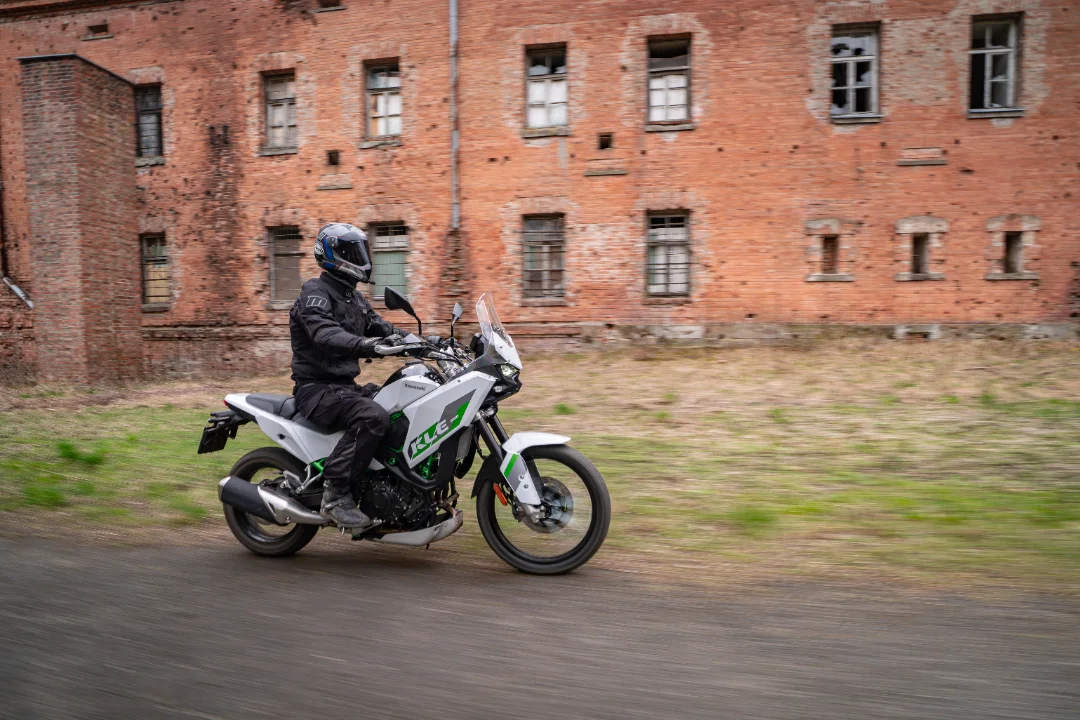
Kawasaki KLE500: The Return of a Legend or a Reasonable Daily Ride? An Honest Test Without Sugarcoating

Review of the Harley Davidson Pan America 1250 Special - is it worth it?
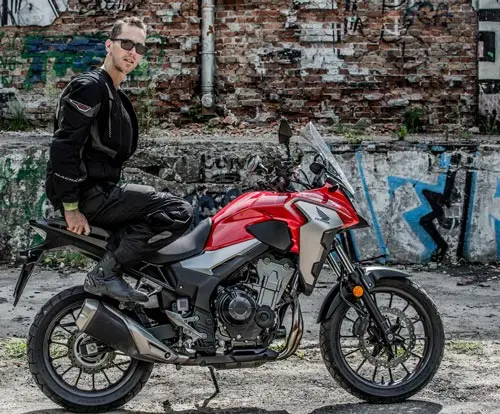
Honda CB500X small motorcycle big fun to ride - the best review you will find
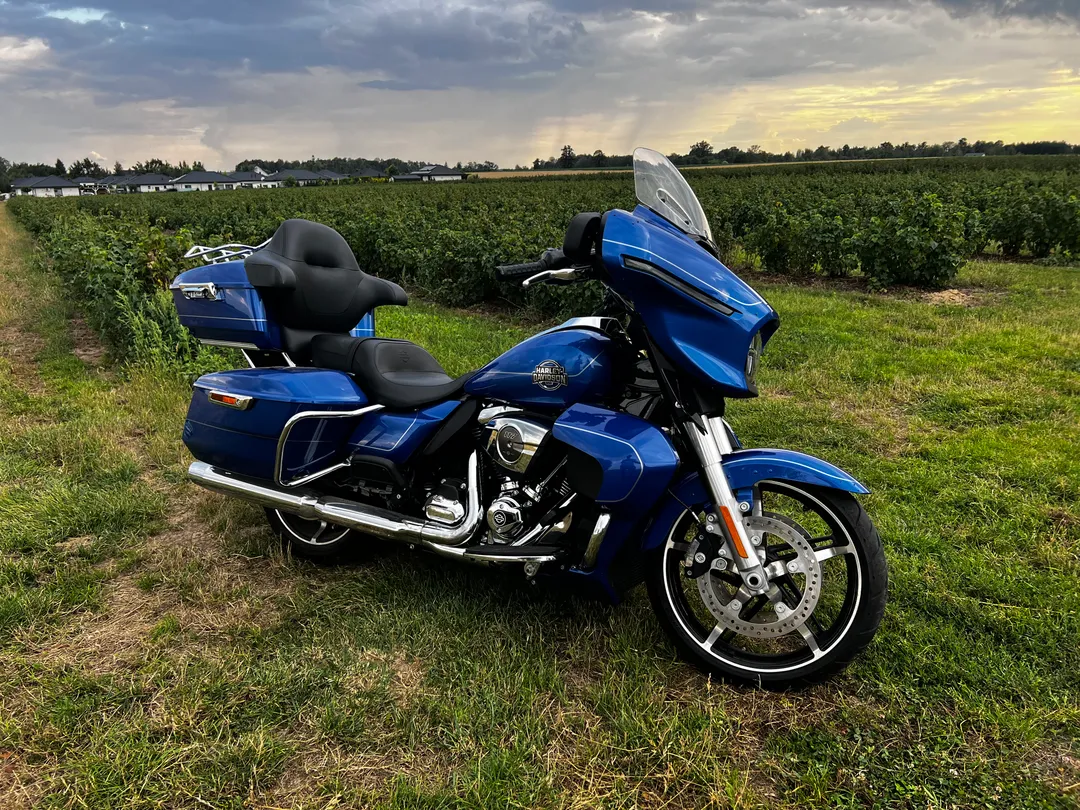
Review of the 2025 Harley-Davidson Street Glide Ultra
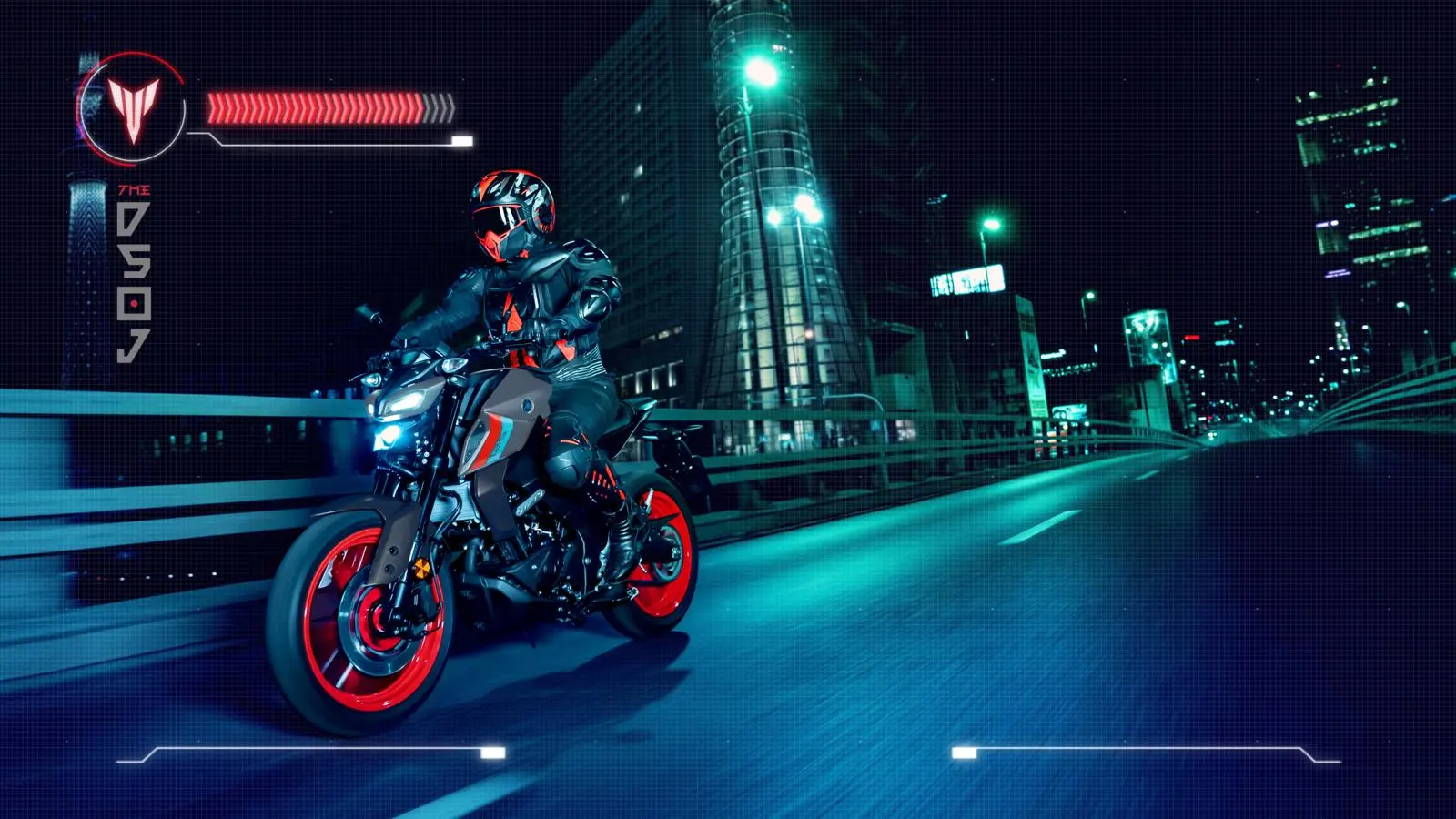
Yamaha MT 125 - the best motorcycle for beginners - price, information and technical data