Yamaha XSR 125 Legacy – review, verdict and technical specifications
16/09/2026
⛽
Track Your Fuel Costs
Log every fill-up, monitor consumption trends and keep all your motorcycle expenses in one place — powered by AI.
Start Your Fuel Journal →The Yamaha XSR 125 Legacy catches the eye, but performance, comfort and costs also matter when buying. We examine its specifications and differences from the standard XSR 125 - Check our review.
Table of Contents
- 1. Key takeaways
- 2. Yamaha XSR 125 Legacy — what exactly are you buying?
- 3. Yamaha XSR 125 Legacy technical specifications
- 4. Performance: how fast will it go, and where is it best suited?
- 5. Comfort and handling: what should you check on a test ride?
- 6. XSR 125, Legacy or MT-125 — which should you choose?
- 7. Where should you buy, and what should you check before paying?
- 8. Is it worth increasing the XSR 125's power?
- 9. Buying verdict: who does the Legacy make sense for?
Key takeaways
- The XSR 125 Legacy has an 11 kW engine, equivalent to around 15 PS. It falls within category A1 limits, and in Poland you can also ride it with a category B driving licence held for at least three years.
- The Legacy is not a more powerful version of the XSR 125. The premium primarily pays for wire-spoked wheels, the finish and styling details.
- A seat height of 815 mm and a weight of around 140 kg mean you should try it for size. The “125” badge alone does not guarantee that you will comfortably get both feet flat on the ground.
- It is primarily intended for city riding and relaxed trips on back roads. At higher speeds, limited power in reserve and a lack of wind protection will be the main constraints.
- Before buying, compare the final price with the standard XSR 125 and MT-125. Also check the condition of the wheels, tyres and final drive, along with the service history of the particular bike.
Scope of this article: below you will find an analysis of the technical specifications, design and buying considerations. Specifications and equipment should be confirmed for the model year and original market of the motorcycle you are considering.
Yamaha XSR 125 Legacy — what exactly are you buying?
The XSR 125 combines retro styling with the modern design of a small road bike. A round headlight, a classically shaped tank and an elongated seat create the look, but underneath sits a liquid-cooled engine with fuel injection and VVA variable valve actuation. A six-speed gearbox, upside-down forks and ABS complete the package.
This is an important distinction: you are buying a motorcycle that looks classic, not one that needs the maintenance of a machine from several decades ago. If you want everyday transport with character, it makes sense. If you expect the performance of a larger machine wrapped in a “category B-friendly” package, there is no getting around the engine capacity.
How does the Legacy differ from the standard XSR 125?
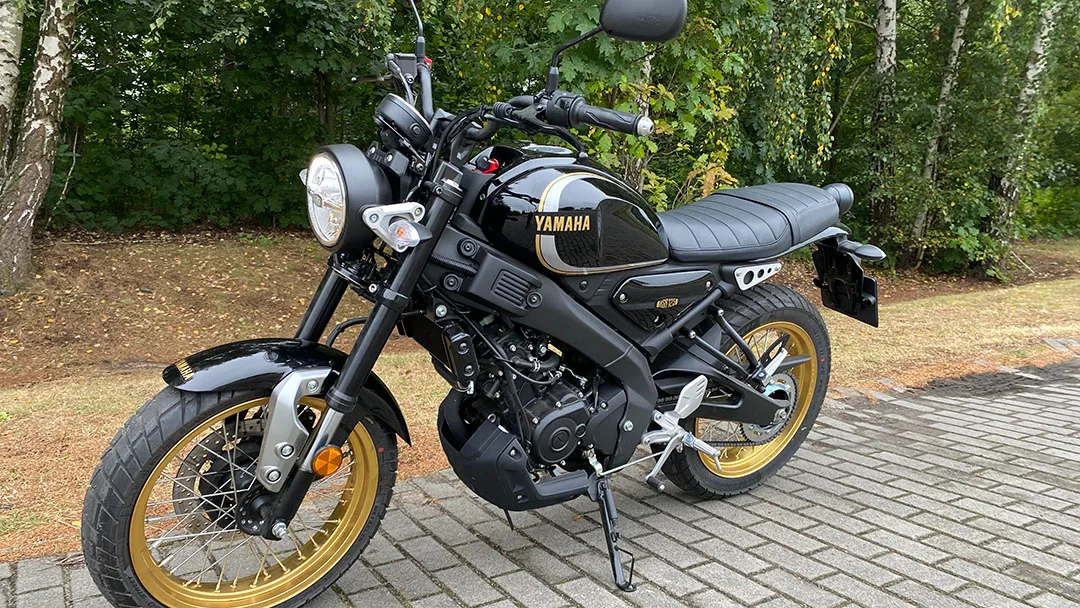
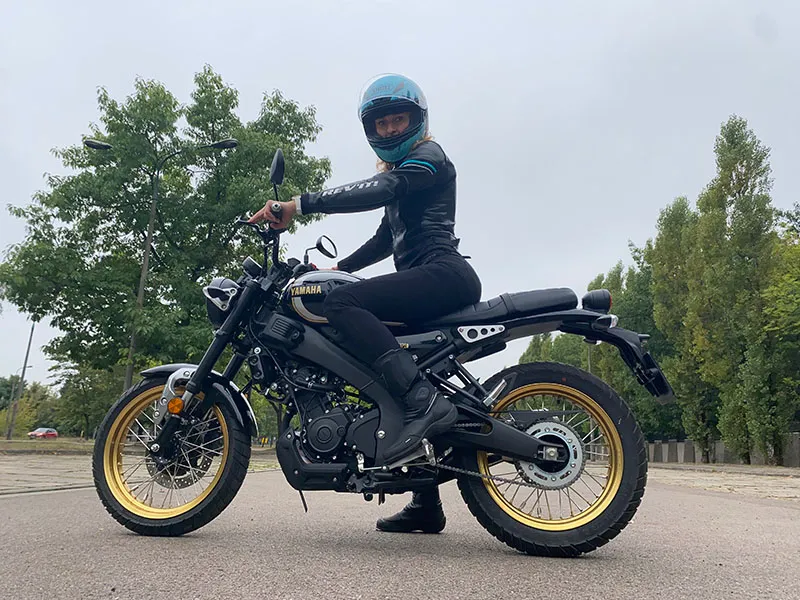
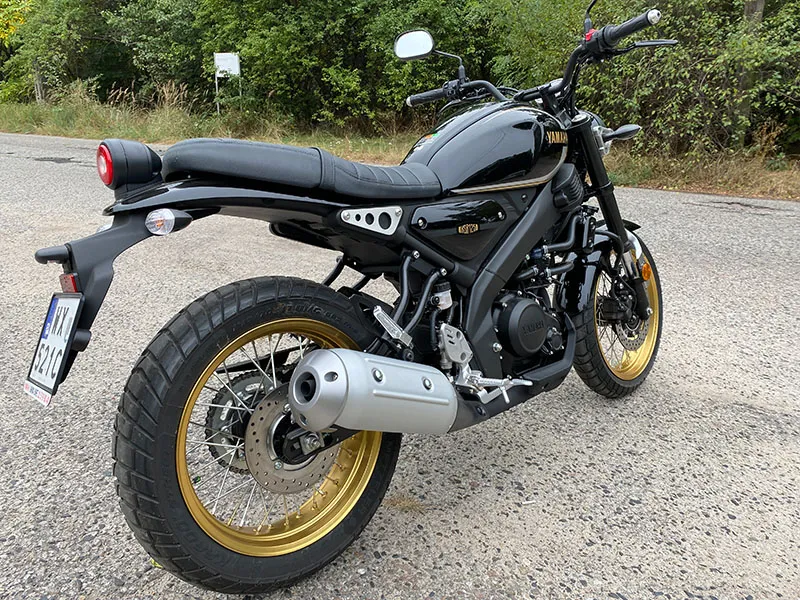
The most obvious difference is wire-spoked wheels instead of cast wheels. The Legacy also stands out through its paintwork, rim colours and trim details, including the exhaust shield. Its specification has also included Metzeler Karoo Street tyres, which emphasise the scrambler styling. Check the tyres fitted to the particular bike in person — especially if you are buying used.
The engine gets no extra power. The key specifications, everyday character and limitations remain similar to those of the regular XSR 125. Choosing the Legacy is therefore mainly about looks. That is a perfectly valid reason, provided you are not paying extra in the hope of better acceleration.
Spokes do not turn it into an off-road motorcycle, either. Both rims are 17 inches in diameter, and the bike is designed for tarmac. You can cautiously venture along a smooth, dry gravel access road to a guesthouse, but scrambler looks are no substitute for ground clearance, suitable tyres and off-road suspension.
Yamaha XSR 125 Legacy technical specifications
The figures below apply to the European specification. When buying, the manufacturer's documentation and type-approval data for the specific model year are the definitive sources.
Specification | Value |
|---|---|
Engine | Single-cylinder, four-stroke, liquid-cooled, SOHC, 4 valves, VVA |
Displacement | 124 cc |
Maximum power | 11 kW, around 15 PS, at 10,000 rpm |
Maximum torque | 11.5 Nm at 8,000 rpm |
Gearbox | 6-speed |
Final drive | Chain |
Wet weight | Around 140 kg |
Seat height | 815 mm |
Fuel tank | 11 litres |
Front suspension | Upside-down forks, 37 mm tube diameter |
Suspension travel, front/rear | 130/110 mm |
Brakes | 267 mm front disc, 220 mm rear disc, ABS |
Front tyre | 110/70-17 |
Rear tyre | 140/70-17 |
Claimed fuel consumption | Around 2.1 l/100 km in the type-approval test cycle |
Performance: how fast will it go, and where is it best suited?
Peak power arrives high in the rev range, at 10,000 rpm. In practice, this means you need to use the revs and gearbox to accelerate briskly. VVA helps the engine work across different rev ranges, but it does not turn a 125 into a motorcycle that will accelerate eagerly from any speed in top gear.
What is the top speed?
As a rough guide, you may see reports of around 110–120 km/h on the speedometer, but do not treat this as a guarantee or a measurement from us. A speedometer reading is not the same as GPS speed, and the result depends on the wind, road gradient, rider weight and riding position. Without comparable measurements, it would not be honest to give a single precise figure.
For touring, something else matters more: how much performance remains in reserve for overtaking. Near top speed, there will be very little. For a weekend trip, choose local roads rather than a route that requires you to keep pace with faster motorcycles for long periods. With a passenger, luggage or a headwind, the limitations will become apparent sooner.
Fuel consumption and planning fuel stops
The claimed figure of around 2.1 l/100 km looks favourable, but it is not a result from our own riding. High revs, frequent acceleration and extra weight can increase fuel consumption. Do not plan your range by multiplying the published fuel consumption by the full tank capacity. First establish actual consumption using the brim-to-brim method, and leave a reserve when travelling.
Comfort and handling: what should you check on a test ride?
The layout of the handlebars, seat and footrests encourages a more upright position than on the sporty YZF-R125. However, this does not automatically mean comfort for riders of every height. Leg length, arm reach, seat width and whether you can adjust your body position while riding all matter.
Riding position
The most comfortable position is not necessarily the most upright one. Your elbows should be slightly bent, your shoulders relaxed and your wrists free from excessive bending. The handlebars are for steering, not for supporting your entire upper body. Your knees should not be tightly folded or catch on parts of the motorcycle.
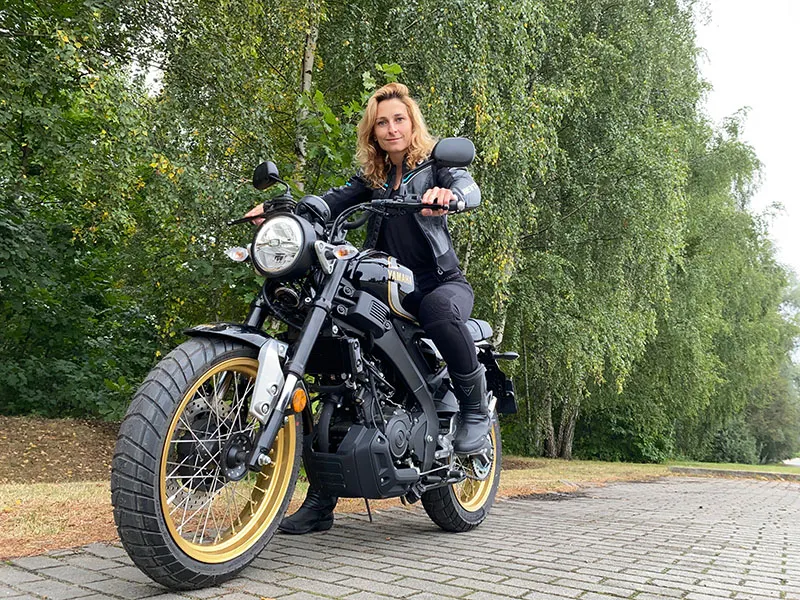
With an 815 mm seat height, make sure you try the bike for size while wearing motorcycle boots. Check how securely you can put your feet down at a standstill, move backwards and manoeuvre on a slightly sloping surface. If you are returning to riding after years away, confidence at low speeds matters more than a stylish photo outside a café.
How can you assess the handling without guessing?
A weight of around 140 kg, road-oriented wheels and wide handlebars give reason to expect easy manoeuvring. However, the tyres, tyre pressures, chassis setup and mechanical condition also determine how the bike actually behaves. Upside-down forks alone are no guarantee of perfect suspension.
- Make a few gentle U-turns and pull away several times — assess the clutch and low-speed balance.
- On a safe stretch of road, check braking smoothness and lever response.
- Ride over ordinary, uneven tarmac, not just the smooth street outside the dealership.
- At a legal speed outside town, assess the wind pressure. The XSR does not offer extensive wind protection.
- If you plan to ride two-up, check the passenger accommodation and the permitted load in the documentation.
A short ride will reveal ergonomic problems, but it will not prove comfort after 300 km. Without a longer test, there is no basis for promising all-day seat comfort.
XSR 125, Legacy or MT-125 — which should you choose?
The XSR 125, MT-125 and YZF-R125 are sometimes described as closely related “triplets”. They share a related modern 125 cc engine concept with VVA, but they are not identical motorcycles with different headlights. They differ in ergonomics, styling and chassis details that vary by model year.
- Standard XSR 125: choose it if you want retro styling but do not feel the Legacy's spokes and details justify the extra cost.
- XSR 125 Legacy: it makes sense if this is the version you like best and your budget also covers proper riding gear and servicing.
- MT-125: take a look if you prefer a modern naked bike. Read the Yamaha MT-125 review and compare its conclusions with your own impressions when trying it for size.
- YZF-R125: consider it if you want fairings and a sporty character, and are happy to accept a different riding position.
When buying a used 2021 XSR, do not assume that every reference to the model refers to the Legacy. Verify the version through the documents and factory specification, rather than relying solely on the advert's description.
Where should you buy, and what should you check before paying?
Look for a new XSR 125 Legacy at authorised Yamaha dealers, asking about actual availability and model year. An offer still listed online does not necessarily mean the motorcycle is sitting in the showroom. On the used market, compare adverts from dealers and private sellers.
We do not quote a single “current” price without a verified offer. Ask for the final price of the motorcycle ready for collection, warranty terms, the cost of the first service and any additional charges. Assess the difference from the regular XSR using offers for similar model years, rather than comparing discounted old stock with the list price of a new delivery.
Used-bike checklist
- Documents and VIN: matching numbers, provenance, registration history and the seller's legal right to the vehicle.
- Engine: cold starting, no leaks, steady running and documented servicing.
- Signs of drops or crashes: handlebar ends, levers, footrests, engine covers and steering stops.
- Legacy wheels: rim condition, corrosion and spoke tension; any play or runout needs assessment by a workshop.
- Tyres: age, wear, damage and correct sizes. Also establish whether the wheel requires an inner tube — this affects how a puncture can be repaired on the road.
- Final drive and brakes: condition of the chain, sprockets, discs and pads; the ABS warning light should behave as described in the manual.
- Modifications: exhaust approval, electronics changes and whether all factory equipment is present.
Is it worth increasing the XSR 125's power?
If you ride on an A1 licence or a Polish category B driving licence, increasing power beyond 11 kW takes the motorcycle outside the limits of those entitlements. Engine capacity and power-to-weight restrictions also apply. Changes to displacement, engine management or the exhaust system can also create type-approval, warranty and insurance issues.
A louder exhaust alone is not proof of a power gain. Changing the final-drive gearing does not add horsepower either — it simply changes the compromise between acceleration, engine speed and road speed. The same logic applies to the MT-125.
If the motorcycle performs noticeably worse than it should, start with servicing: the air filter, spark plug, valve clearances according to the schedule, final-drive condition, tyre pressures and any brake drag. If what you primarily need is a safer performance reserve for overtaking, obtaining the appropriate licence and buying a larger motorcycle is the more sensible route.
Buying verdict: who does the Legacy make sense for?
Based on its design and specifications, the XSR 125 Legacy is a sensible candidate for everyday city use and relaxed solo trips. Its main advantage over the standard XSR is its appearance, not its performance. This is a motorcycle for you if you also want to enjoy the simple sight of it parked outside your home — and accept the limitations of the 125 class.
If your priorities are frequent trips with a passenger, long high-speed journeys or maximum practicality for every cent, compare other options. First try it for size, then take a test ride and work out the costs. The gold rims can wait five minutes.
#Yamaha XSR 125#Yamaha XSR 125 Legacy#Yamaha#motocykle 125#motocykle retro#prawo jazdy B#zakup motocykla
Frequently Asked Questions
- What is the Yamaha XSR 125 Legacy's top speed?
- As a rough guide, reported figures are around 110–120 km/h on the speedometer, but this is neither a guaranteed speed nor a measurement from us. GPS speed may be lower. Wind, road gradient, rider weight and riding position all have a significant effect.
- Is the Yamaha XSR 125 Legacy more powerful than the regular XSR 125?
- No. Both versions produce 11 kW, equivalent to around 15 PS. The Legacy is distinguished primarily by its wire-spoked wheels, paintwork and trim details, not by higher performance.
- Can you ride a Yamaha XSR 125 with a category B driving licence?
- In Poland, yes, if you have held category B for at least three years and the motorcycle remains within the required limits: up to 125 cc, up to 11 kW and up to 0.1 kW/kg. The factory-standard XSR 125 meets these conditions. Before travelling abroad, check local regulations — the Polish entitlement does not automatically apply in every country.
- How can you increase the power of a Yamaha XSR 125 or MT-125?
- There is no straightforward, guaranteed power gain from changing the exhaust alone. Both models already use the full 11 kW category A1 limit in factory form. Modifications exceeding this limit mean that an A1 licence or Polish category B entitlement will no longer be sufficient. If performance has dropped, first restore the motorcycle to proper working order through servicing.
- What is the most comfortable riding position on a motorcycle?
- One in which your shoulders are relaxed, your elbows slightly bent, your wrists naturally positioned and your knees not excessively bent. The XSR's upright posture may help with comfort, but the fit depends on your body proportions. Check it while wearing motorcycle boots and riding gear, both when trying the bike for size and on a test ride.
- Where can you buy a Yamaha XSR 125 Legacy?
- Check availability of new bikes with authorised Yamaha dealers. For used examples, also look at used-bike dealers and private adverts. Compare model year, condition, service history and final price, and confirm that it is a Legacy through the documentation and equipment.
Check other motorcycle tests
XPENG P7+ – our verdict after a week behind the wheel
Geely Starray EM-i review: strengths, weaknesses and fuel consumption
Honda CBR 125 – test, opinions and used-buying guide to a beginner’s sportbike
Kawasaki KLE500: The Return of a Legend or a Reasonable Daily Ride? An Honest Test Without Sugarcoating

Review of the Harley Davidson Pan America 1250 Special - is it worth it?