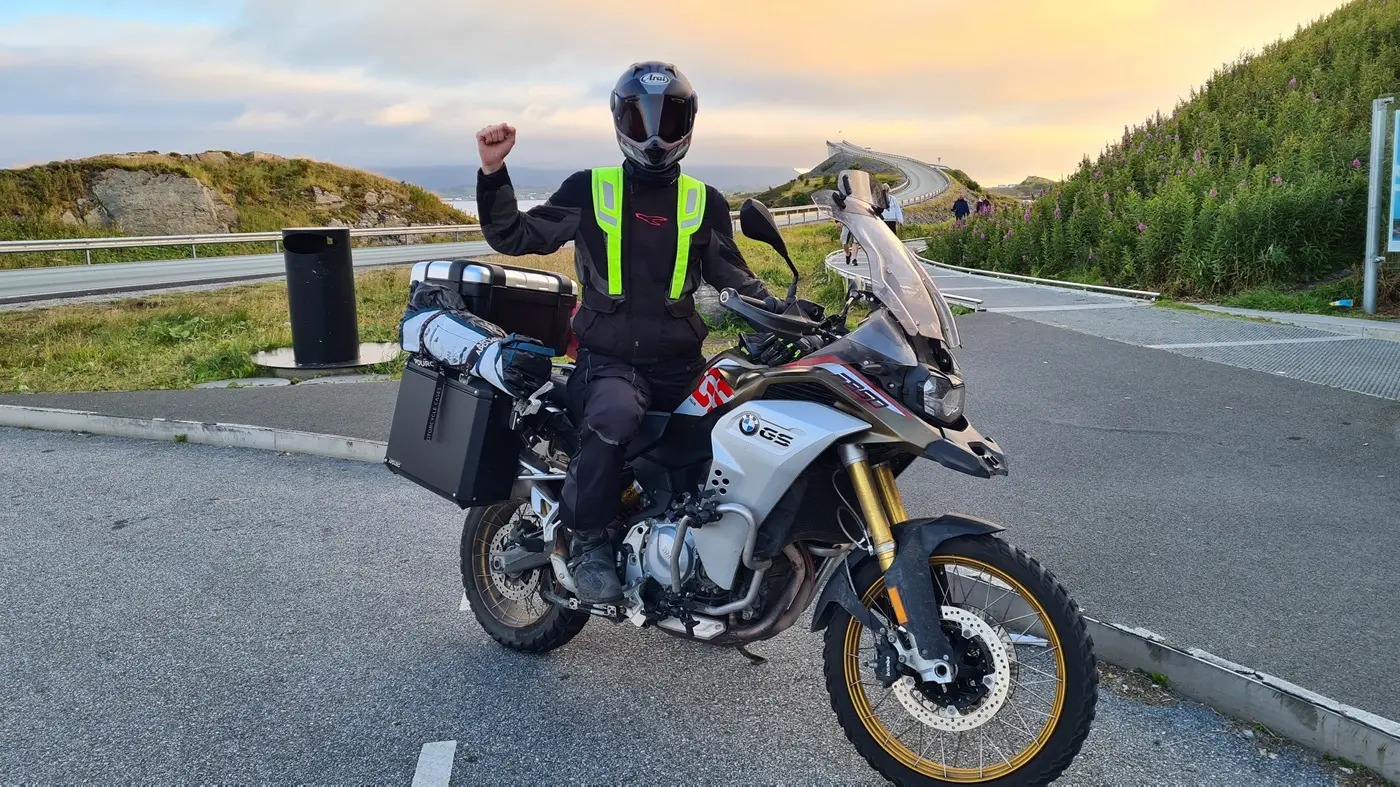
Geirangerfjorden and the Atlantic Road by motorcycle: heading for Storseisundbrua [day 8]
25/06/2025
⛽
Track Your Fuel Costs
Log every fill-up, monitor consumption trends and keep all your motorcycle expenses in one place — powered by AI.
Start Your Fuel Journal →Day eight of the journey through Norway takes us through Geirangerfjorden, Hjelle and the Ålesund area towards the Atlantic Road and Storseisundbrua Bridge. This stage is packed with hairpin bends, ferries, viewpoints and some of Scandinavia’s most photogenic roads.
Table of Contents
- 1. Key takeaways
- 2. Geirangerfjorden and the Atlantic Road - the day’s plan
- 3. Hjelle - a charming village perfect for a stop
- 4. Geirangerfjorden - the beauty of Norway
- 5. Riding around Geirangerfjorden
- 6. Viewpoints in Geiranger
- 7. The route to Ålesund
- 8. Storseisundbrua - the bridge on the Atlantic Road
- 9. Practical information: weather, fuel, ferries and accommodation
- 10. What about Route 17?
- 11. The day in summary
Key takeaways
- Geirangerfjorden and the Atlantic Road make one of the best combinations for a motorcycle trip through Norway: fjords, mountain hairpins, ferries and ocean bridges in a single stage.
- The day’s most spectacular highlights are Flydalsjuvet, Ørnesvingen, Geirangervegen, the Ålesund area and Storseisundbrua on the Atlantic Road.
- The actual riding time from the Geiranger area to the Atlantic Road depends on your route, ferries and the weather; allow a full day of riding with longer stops.
- For motorcyclists, the key considerations are the weather, conditions on mountain passes, wind on bridges and seasonal road closures, especially around mountain routes such as Trollstigen.
- The Atlantic Road, or Atlanterhavsvegen, runs through Norway and forms part of National Road 64, while Route 17, Kystriksveien, is a separate, longer coastal route heading north.
Geirangerfjorden and the Atlantic Road - the day’s plan
This stage of the trip combines two completely different sides of Norway. First comes Geirangerfjorden: steep fjord walls, hairpins, waterfalls and viewpoints. The road then gradually leads towards the coast, Ålesund, Molde and onwards to the Atlantic Road, whose main icon is Storseisundbrua Bridge.
If you are planning a similar ride, treat this day as a scenic stage rather than a quick transfer. Even if the map suggests a reasonable riding time, photo stops, ferries, speed limits and changeable weather can add several hours to the journey.
The best route between Geirangerfjord and the Atlantic Road
The most interesting option leads from the Geiranger area via the viewpoints above the fjord, then towards Eidsdal and the ferry crossings or via Ålesund, before continuing towards Molde and Averøy. If conditions and the season allow, many motorcyclists also combine this stretch with the Trollstigen area, home to the famous Trolls’ Road. Bear in mind, however, that mountain roads in Norway can be closed seasonally or temporarily because of landslides, snow and roadworks.
In practice, you can plan the journey in two ways: the quick option, Geiranger - Ålesund - Molde - Atlanterhavsvegen, or the scenic option, with more side roads, ferries and viewpoints. On a motorcycle, the second option is definitely more rewarding, provided you have time to spare.
Geirangerfjord and the Atlantic Road - riding time
Allow at least one full day for the stretch from Geirangerfjorden to the Atlantic Road. The ride itself, without long stops, may take several hours, but with photography, fuel stops, ferries and meal breaks, it becomes a full day in the saddle. If you want to explore Ålesund and the viewpoints around Geiranger at a relaxed pace, then ride Atlanterhavsvegen during golden hour, it is best to split the route over two days.
Hjelle - a charming village perfect for a stop
Hjelle is a small but exceptionally charming village, ideal for a peaceful stop on a motorcycle trip through south-western Norway. Surrounded by mountains, water and rugged scenery, it offers a moment to catch your breath before continuing towards Geirangerfjorden.
It is one of those places where you do not need to do anything in particular. Just park the motorcycle, take off your helmet, walk down to the water and spend a few minutes simply taking in the scenery. In Norway, stops like these are as much a part of the journey as the famous attractions themselves.
A must-do: cheesecake at the Old Shop
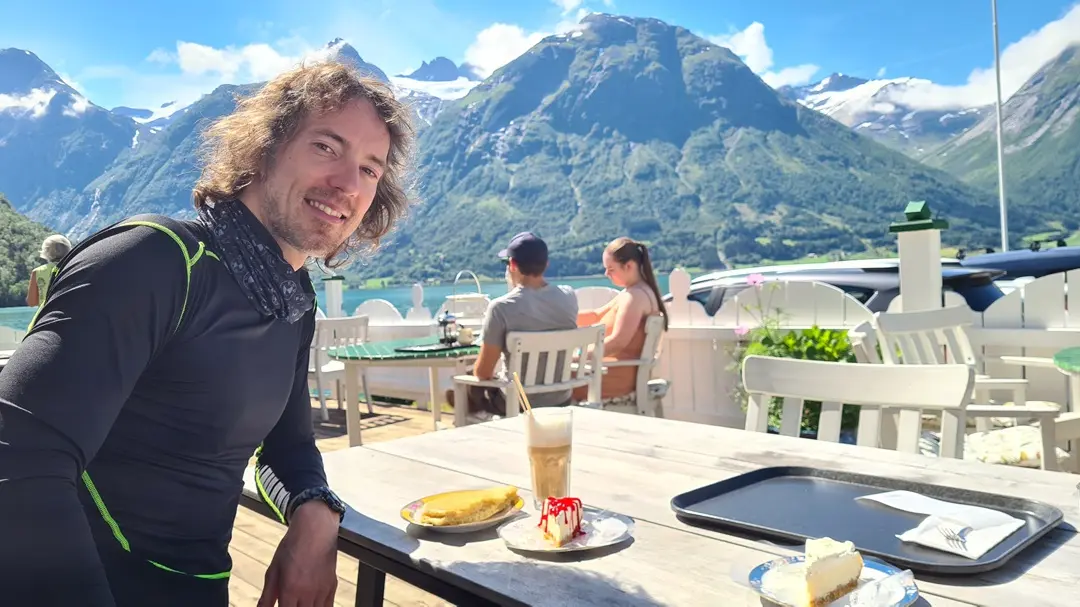
You cannot leave Hjelle without trying the cheesecake at the local Old Shop. Travellers know this place for its hospitality, peaceful atmosphere and baked treats that can restore your energy for the rest of the day. Cheesecake with a view of the Norwegian mountains tastes better here than at any café beside a main road.
Oppstrynsvatnet - an azure lake you have to see
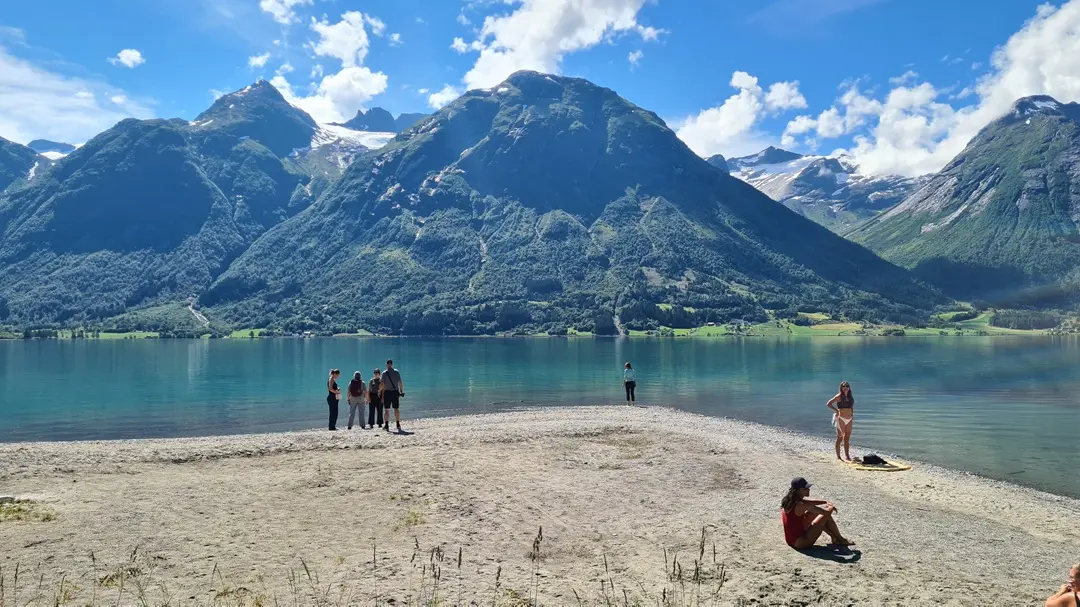
Lake Oppstrynsvatnet, with its intensely azure water, is another highlight of this stretch. Set between steep slopes and green valleys, it perfectly illustrates why Norway’s fjords and scenic routes are a motorcyclist’s dream.
Geirangerfjorden - the beauty of Norway
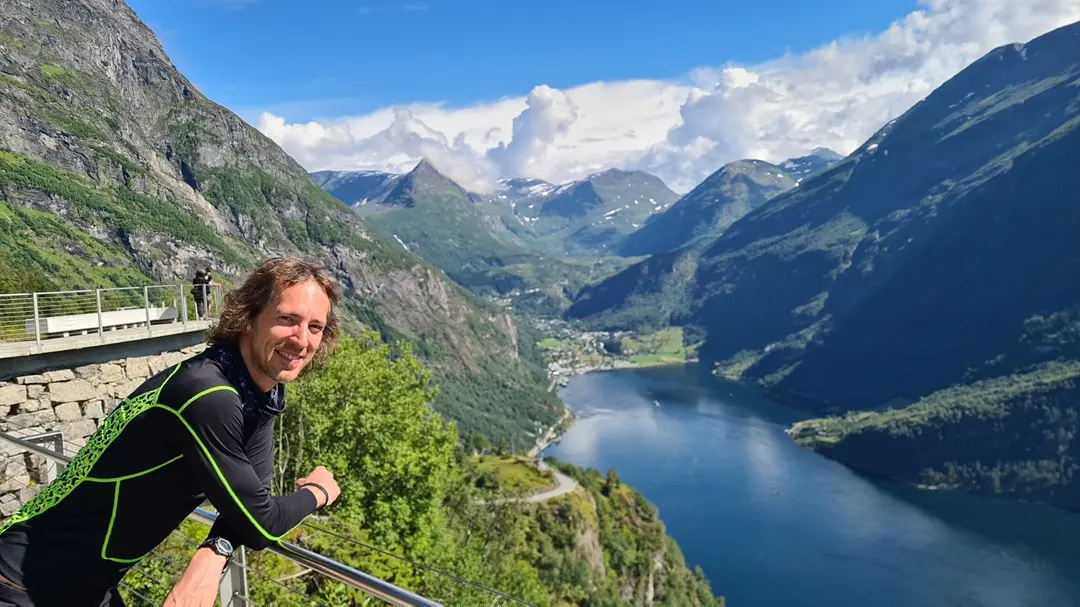
Geirangerfjorden is one of the world’s most spectacular fjords and a symbol of Norway. It is around 15 km long, with steep walls, deep water, numerous waterfalls and viewpoints that regularly feature in guides to Scandinavia’s most beautiful routes.
The fjord is a UNESCO World Heritage Site as part of the West Norwegian Fjords. For a motorcyclist, however, its greatest appeal is not the listing itself, but the way the road winds down through hairpins into Geiranger before climbing the other side of the valley.
The history of Geirangerfjorden
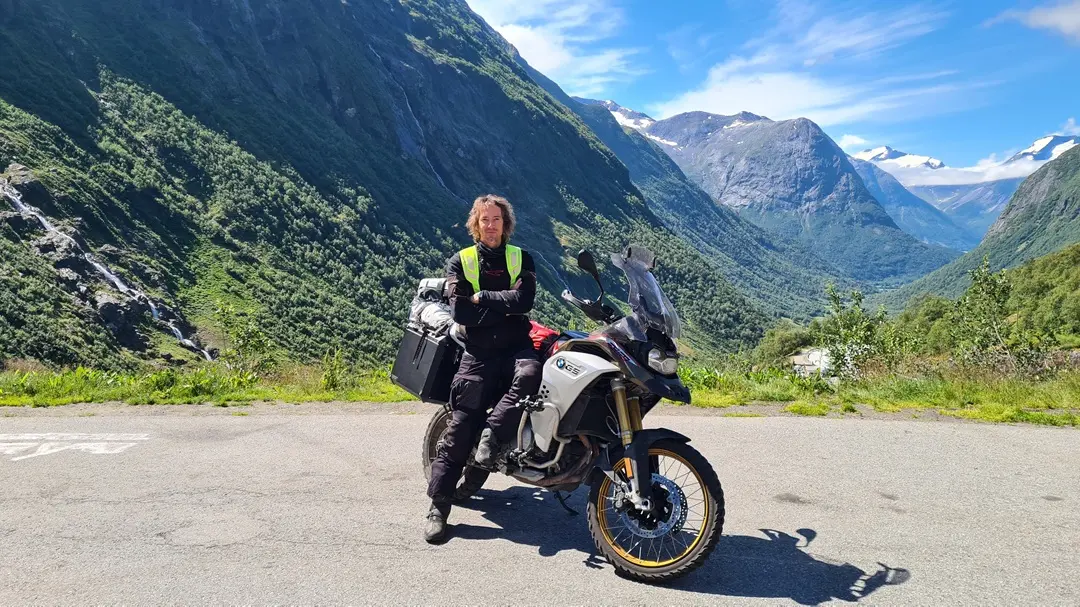
The history of Geirangerfjorden dates back to when the fjord served as a natural transport and trading route. Small farms perched high on the slopes show how demanding life in this region once was. Today, Geirangerfjorden is one of Norway’s biggest tourist attractions, yet it still retains its rugged northern character.
The fjord’s unique features
The best-known sights around Geirangerfjorden are the De Syv Søstrene waterfalls, or the Seven Sisters, and the Flydalsjuvet and Ørnesvingen viewpoints. The fjord is relatively short, but its steep slopes and depth make an enormous impression, both from the road and from the deck of a boat.
Geirangerfjord vs the Atlantic Road - which is more impressive?
Geirangerfjord and the Atlantic Road offer completely different experiences. Geirangerfjorden impresses with the scale of its mountains, the height of its fjord walls and its hairpins. Atlanterhavsvegen has a different appeal: riding just above the ocean, between islets, bridges and waves. If I had to choose from a motorcyclist’s perspective, Geiranger offers more varied riding, but the Atlantic Road has a more cinematic, rugged atmosphere.
Riding around Geirangerfjorden
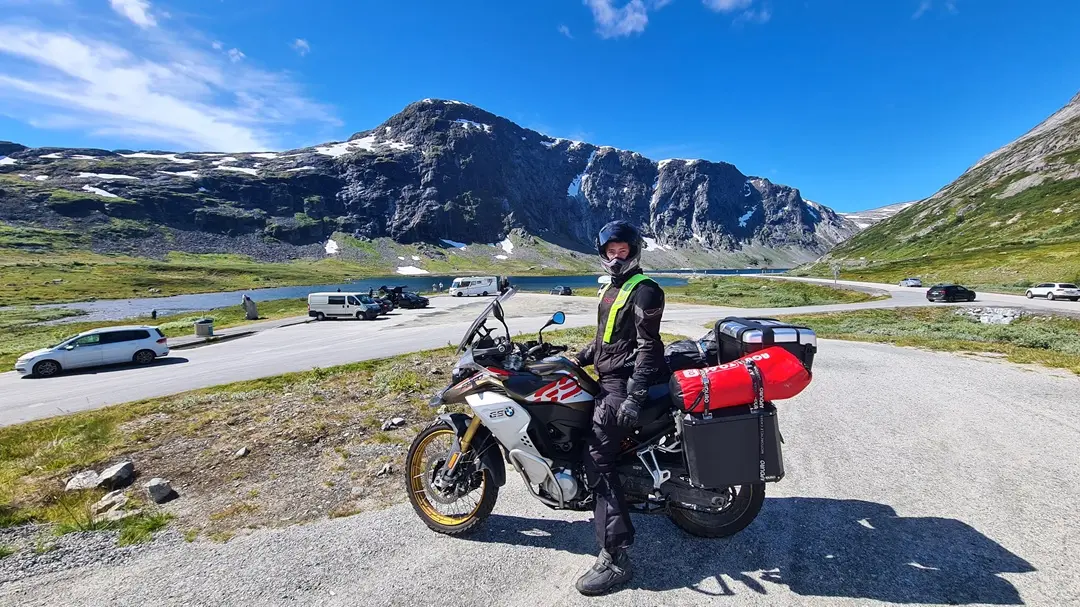
The best routes with countless bends
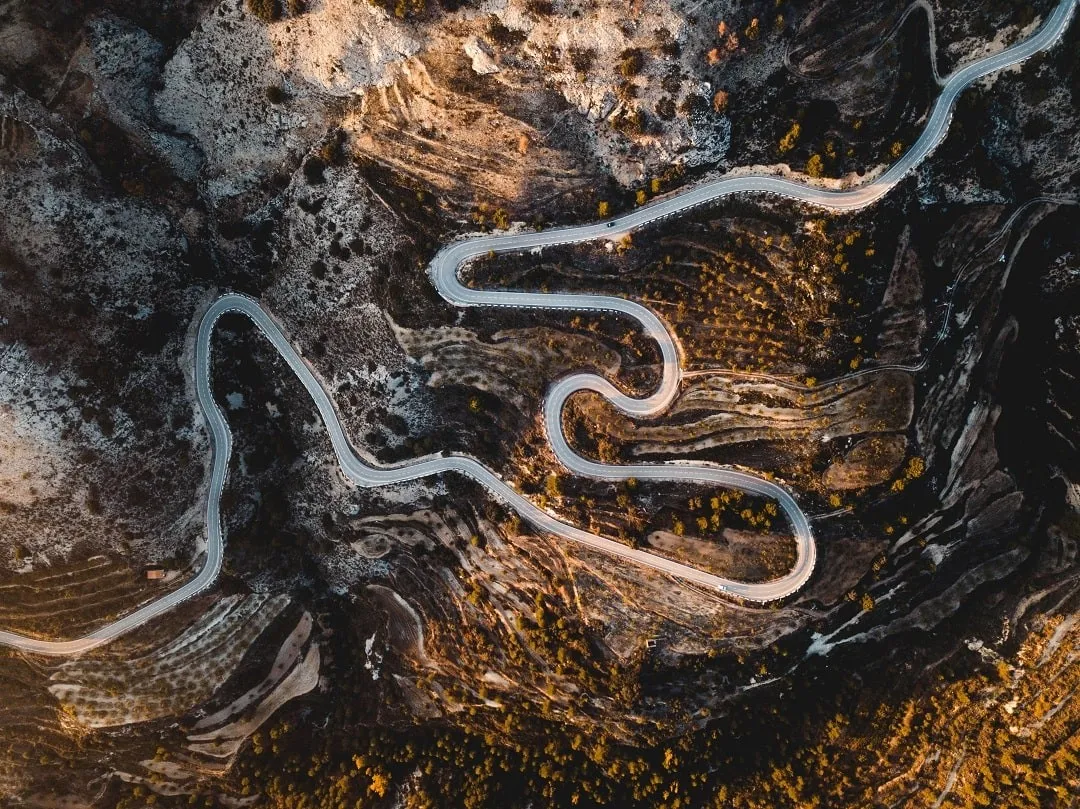
Geirangerfjorden offers some of Norway’s most exciting motorcycle routes. Geirangervegen, the Eagle Road and the surrounding hairpins are must-rides for anyone who enjoys technical riding, elevation changes and bends set in scenery that is hard to match anywhere else in Europe.
You do need to ride sensibly, though. The road surface can be wet, shaded sections stay cold for a long time, and around bends you may encounter stones, sand, motorhomes and coaches. This is not a place for breaking speed records, but for smooth, precise riding.
What should you see while riding towards Geiranger?
When riding towards Geirangerfjorden, do not overlook the waterfalls, roadside pull-offs, small scenic parking areas and viewpoints such as Flydalsjuvet and Ørnesvingen. Even brief stops of 5-10 minutes make the route more memorable than riding through without stopping.
Viewpoints in Geiranger
Flydalsjuvet - unique views
Flydalsjuvet is one of Geiranger’s most spectacular viewpoints. From here, you can see the fjord, the village of Geiranger, cruise ships and the road winding along the slopes. It is one of the best places for a photo with your motorcycle, although you should expect plenty of tourists in peak season.
Ørnesvingen - the Eagle Road
Ørnesvingen, the viewpoint on the Eagle Road, offers a sweeping panorama of Geirangerfjorden and its waterfalls. It is also a fantastic stretch to ride: a series of bends, elevation changes and views that inevitably slow the pace of your journey.
Other popular viewpoints
It is also worth stopping at the smaller pull-offs around Geiranger. Norway is well equipped for road tourism, but popular spots fill up quickly. The best light for photography is often in the morning or late afternoon, when the contrast across the fjord is softer.
The route to Ålesund
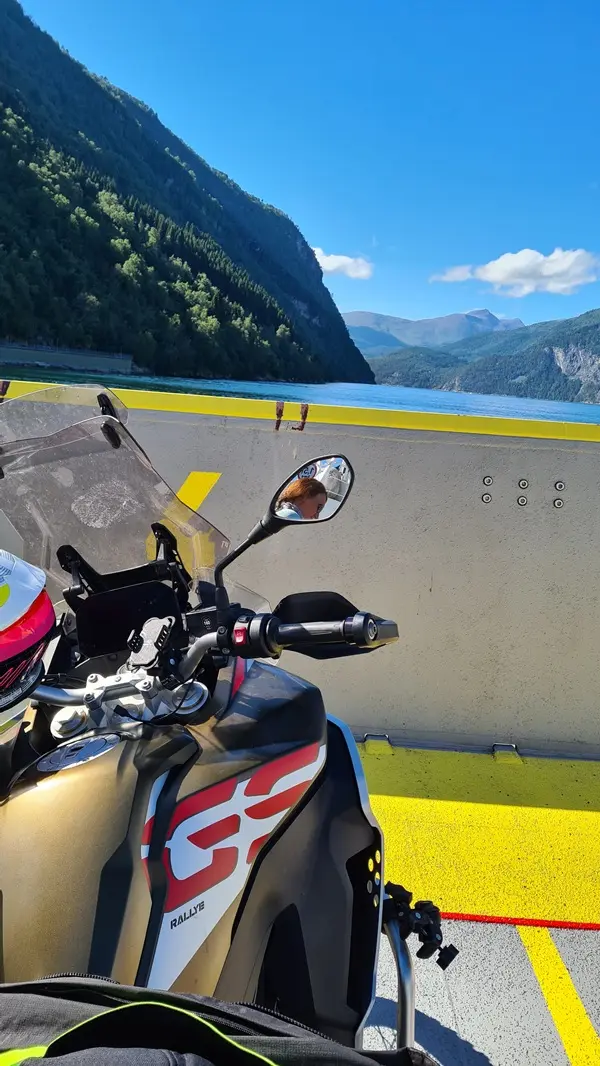
The road from Geiranger to Ålesund
The journey from Geiranger to Ålesund is a fantastic part of the trip, combining mountain roads, ferry crossings and an increasingly coastal landscape. It is a good option if you want to combine Geirangerfjorden and the Atlantic Road at a relaxed pace, with an overnight stop along the way.
What is worth seeing along the way?
Along the way, look beyond the major attractions and pay attention to local ferries, small harbours, lakes and viewpoints. Ålesund is a good place for a longer stop: the town is famous for its Art Nouveau architecture and the Aksla viewpoint, which reveals the layout of the islands and fjords.
Storseisundbrua - the bridge on the Atlantic Road
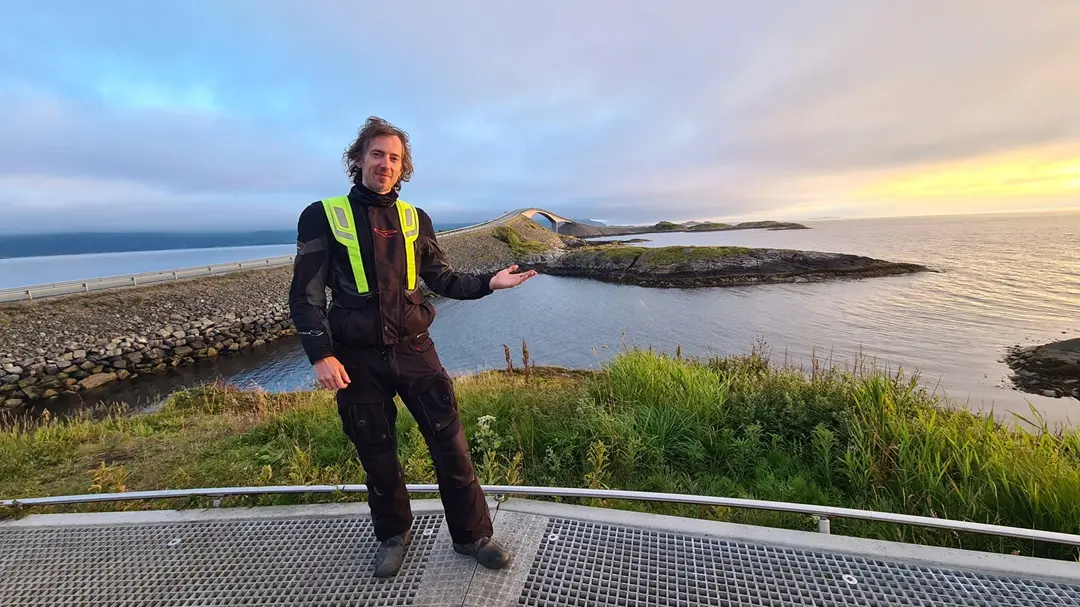
The architecture of Storseisundbrua Bridge
Storseisundbrua Bridge, often called the “bridge to heaven”, is the Atlantic Road’s most recognisable landmark. From certain angles, it looks as though it suddenly ends above the ocean. This is the result of the bridge’s geometry, the viewing angle and the undulating course of the road between the islands.
The Atlantic Road - Atlanterhavsvegen
The Atlantic Road, or Atlanterhavsvegen, is in Norway and forms part of National Road 64. It connects islands and stretches of skerry coastline between the Molde area and Kristiansund. For motorcyclists, it is a short but highly distinctive stretch: bridges, bends, ocean on both sides and the feeling of riding along the boundary between land and sea.
Bear in mind that the Atlantic Road itself is not particularly long. Its strength lies not in the distance, but in the scenery. Rather than treating it as a quick ride-through, it is best to ride it in both directions, stop at the parking areas and wait for good light.
Is the Atlantic Road worth visiting?
Yes, especially if you are riding through western Norway. The Atlantic Road is a must for motorcyclists, but it works best as part of a longer route taking in Geirangerfjord, Trollstigen, Ålesund, Molde and the coast. On a sunny day it is beautiful, while strong winds and a rough ocean can make it downright dramatic.
Practical information: weather, fuel, ferries and accommodation
Weather on the Geirangerfjord - Atlantic Road route
The weather along this stretch can change several times in a single day. In the mountains, it can be cold, wet and foggy, while the ocean brings wind. On a motorcycle, it is worth keeping waterproofs, warm gloves and a dry bag for electronics close at hand. Check local forecasts and road updates before setting off, as seasonal closures and diversions are not uncommon in Norway.
Ferries and charges
On the route between the fjords and the coast, ferries are a normal part of the journey. For a motorcyclist, they often provide a pleasant break, but you need to factor in waiting times. Many road tolls and ferry fares in Norway are collected automatically, so check the current payment rules for foreign vehicles before your trip.
Accommodation near Geirangerfjorden and the Atlantic Road
The most convenient places to stay are around Geiranger, Ålesund, Molde, Kristiansund and the smaller towns and villages along the way. Booking ahead is sensible during the summer season, especially if you do not want to search for an available room or campsite cabin after a full day of riding.
Geirangerfjord and the Atlantic Road - route map
The map at the beginning of the article shows this stage of the journey and helps explain how to connect Geirangerfjorden with the Atlantic Road. When planning your own ride, save the route offline, as mobile coverage can be patchy in the mountains and around the fjords. It is also good practice to add alternative accommodation options and petrol stations.
What about Route 17?
Route 17, known as Kystriksveien, is a separate, long and very scenic route following the coast further north. It should not be confused with the Atlantic Road, which is part of Road 64. However, if you plan to continue towards northern Norway after riding Atlanterhavsvegen, Kystriksveien is one of the best choices.
Route 17 offers ferries, islands and Helgeland, with the option of branching off towards Lofoten and Vesterålen further along. You can read more about this option in the article Route 17 Norway.
The day in summary
Geirangerfjorden and the Atlantic Road are a combination that shows Norway at its best: first monumental fjords and hairpins, then the ocean, bridges and rugged coastline. For a motorcyclist, this stage demands concentration but delivers enormous satisfaction. If you are planning a similar route, do not race against the clock - plan your stops, check the weather and allow yourself a slower pace.
#Geirangerfjorden#trasa atlantycka#Droga Atlantycka#Atlanterhavsvegen#Storseisundbrua#Norwegia motocyklem#fiordy norweskie#Geirangerfjord#Ålesund#Trollstigen
Frequently Asked Questions
- How can you combine Geirangerfjord with the Atlantic Road?
- The most practical option is to ride from the Geiranger area towards Ålesund, Molde and onwards to Averøy, which offers easy access to the Atlantic Road. If conditions allow, you can also include Trollstigen, but you need to check for seasonal road closures.
- Does the Atlantic Road run through Norway?
- Yes. The Atlantic Road, or Atlanterhavsvegen, is in Norway and forms part of National Road 64. It lies on the coast between the Molde area and Kristiansund.
- Is the Atlantic Road worth visiting by motorcycle?
- Absolutely. It is a short but spectacular stretch with bridges, ocean views and the distinctive Storseisundbrua Bridge. It is best treated as part of a longer route through the fjords rather than a standalone destination for a full day.
- How long does it take to ride from Geirangerfjorden to the Atlantic Road?
- Depending on your route, ferries, the weather and the number of stops, it is worth allowing most of the day. For relaxed sightseeing and photography, plan it as a full-day stage or break it up with an overnight stay around Ålesund or Molde.
- What is the most beautiful route in Norway for motorcyclists?
- It is hard to pick just one, but the combination of Geirangerfjorden, the Eagle Road, Trollstigen and the Atlantic Road ranks among Norway’s most beautiful motorcycle routes. It offers the greatest variety: fjords, hairpins, mountains, ferries and ocean.
Check other routes
Iceland and the Faroe Islands by Motorbike: How to Plan and Ride the North Atlantic's Best Loop
Motorcycle route along the Pilica River: from Warka to the Sulejów Reservoir
Alpine Bends, Espresso and Moto Guzzi. A Complete Scenario for the Italian Trip of a Lifetime

Beijing at Full Throttle: 8 Places You Must Visit in the Chinese Metropolis
Top 5 Off-Road Routes to Ride in the Alps (with Tips for Adventure Motorcyclists)